All recordingsPrices shown exclude VAT. (UK tax is not payable for deliveries to United States.) See Terms & Conditions for p&p rates. | |  | The Ballad Singer
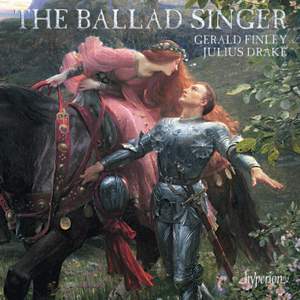
anon.: | O where hae ye been, Lord Randall, my son? traditional, arr. Cyril Scott | Beethoven: | Mephistos Flohlied, Op. 75, 3 | Brahms: | Es war ein Markgraf überm Rhein (No. 29 from Deutsche Volkslieder, WoO 33) | Emanuel: | Alone in the desert, alone, I'm alone | Loewe, C: | Edward, Op. 1 No. 1 (Herder) Die wandelnde Glocke, Op. 20 No..3 | Mahler: | Wo die schönen Trompeten blasen (Des Knaben Wunderhorn) | Porter, C: | The Tale of the Oyster | Schubert: | Erlkönig, D328 | Schumann: | Die Löwenbraut, Op. 31 No. 1 Der Schatzgräber, Op. 45 No. 1 | Stanford: | La Belle Dame sans merci (John Keats) (1877) | Sullivan, A: | The Lost Chord | Wolf, H: | Der Feuerreiter (No. 44 from Mörike-Lieder) |
This latest release from the multi-award-winning partnership of Gerald Finley and Julius Drake features a literary and musical form which inspired the greatest voices of German Romanticism. The foremost poets and composers of the age saw the ballad as a direct link to the folk-minstrels of the past. Frequently ghoulish and sensational in character, ballads satisfied the popular taste for the Gothic. This disc contains some of the greatest examples of the form, including Schubert’s Erlkönig, as well as some fascinating and lesser-known works. The disc also includes selections from the ever popular English ballad tradition. Gerald Finley’s unrivalled gift for characterization and story-telling, honed both on the stages of opera houses around the world and through his extraordinary Lieder recordings, makes him the ideal performer of these works. This is a genuinely entertaining and original disc. “Drake's playing has successfully suited the varied repertoire. Finley has enthralled with his interpretations and delighted with his singing purely as singing, combining the two aspects expertly.” International Record Review, July 2011 “they're all tales and Finley is a fine tale-teller. In Loewe, he sounds as though he's singing just for you, the listener, so rapt and intense is his communication. Drake is a fine accomplice, tuning his fingers to full orchestral capacity for Schumann's psycho-drama 'Die Löwenbraut' and Wolf's 'Der Feuerreiter'” BBC Music Magazine, July 2011 **** “Listen to these wonderfully melodramatic, mostly Victorian ballads by candlelight in a haunted house...Performances full of raging fortissimos and ghoulish tremolandos from Finley and his pianist Julius Drake.” The Times, 18th June 2011 **** “Their approach to text and music consistently casts light on turbulent emotions, at times glaring in its dramatic intensity at others passed through restraining filters. The recital's heart pulses with Wolf's Der Feuerreiter and a spine-tingling account of Stanford's La belle dame sans merci.” Classic FM Magazine, August 2011 **** | | | In stock - usually despatched within 1 working day. |
|
|
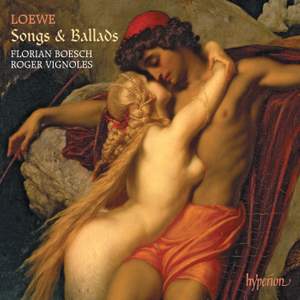
| |  | Carl Loewe: Songs & Ballads
Loewe, C: | Edward, Op. 1 No. 1 (Herder) Tom der Reimer "Der Reimer Thomas lag am Bach", Op. 135a Der Erlkönig, Op. 1 No. 3 (Goethe) Herr Oluf "Herr Oluf reitet spät und weit", Op. 2/2 Wandrers Nachlied, Op. 9 No. 3a Wandrers Nachlied, Op. 9 No. 3b Graf Eberstein Lynceus der Turmer, auf Fausts Sternwarte singend, Op. 9, H.VIII, 3 Süßes Begräbnis, Op. 62 No. 4 Hinkende Jamben, Op. 62 No. 5 Die wandelnde Glocke, Op. 20 No..3 Im Vorübergehen, Op. 81, No. 1 arr. Fritz Der Pilgrim vor St Just, Op. 99, No. 3 Odins Meeresritt "Meister Oluf, der Schmied auf Helgoland", Op. 118 Die Uhr, Op. 123 No. 3 Der Wirthin Töchterlein, Op. 1, No. 2 Meeresleuchten, Op. 145 No. 1 Im Sturme, Op. 145, No. 3 Heimlichkeit, Op. 145, No. 4 Reiterlied, Op. 145, No. 5 |
In his lifetime the German composer Carl Loewe was often referred to as the ‘Schubert of North Germany’. He is frequently credited with the development of the romantic ballad into a powerful art form, and his prolific output of ballads and songs amounts to some four hundred works. Loewe’s treatment of long narrative poems in a clever and powerful mixture of dramatic and lyrical styles, has been a template for many subsequent composers. Many of the ballads on this disc are masterpieces of their genre and they are performed here in a magisterial Hyperion debut by Austrian baritone Florian Boesch. In these refined performances it is clear why Boesch has been labelled as ‘one of the finest interpreters of Lieder of his generation’. His ability to create characters and enact stories brings the dramatic texts vividly to life, while he maintains musical coherence with astonishing lyricism. Loewe’s daring and imaginative accompaniments are played here by the incomparable Roger Vignoles, in another addition to his acclaimed discography of Hyperion recordings. His eloquent pianism and penetrating musicianship match Boesch’s artistry to perfection. “Boesch is arguably [Loewe's] finest interpreter today, and this disc is mesmerising. An expressionistic vocal actor, Boesch has the ability to change the sound of his voice to fit the character he is portraying; when he gets to the big dialogues like Erlkönig, Edward or Herr Oluf, it's hard to believe that only one person is singing...A benchmark recording, and essential listening.” The Guardian, 12th May 2011 ***** “Loewe is at his best when the drama of a ballad unfolds through the characters' words, and his 'Erlkönig', though less terrifying than Schubert's, is more chilling: the child's death is a greater musical shock....Boesch sings these ballads with strong dramatic sympathy...Vignoles's accompaniment is always confident, very musical and perceptive.” International Record Review, May 2011 “Boesch's performance...demonstrates huge imaginative variety in characterisation (offering two different voices when necessary, or even three in Loewe's setting of Erlkonig), and moving convincingly to the lower register...Vignoles matches him in playing of perception in what is pretty well an ideal introduction to a fascinating figure.” BBC Music Magazine, July 2011 ***** “Loewe's writing is perhaps less sophisticated than Schubert's but, like him, he had a supremely appealing melodic gift...As for the singing, I cannot praise it too highly. Florian Boesch has a warmly attractive baritone voice and his diction is first class, as is his response to the word meanings. Roger Vignoles's accompaniments, too, give great pleasure in themselves, especially in the pictorial devices which Loewe so relishes.” Gramophone Magazine, August 2011 | | | In stock - usually despatched within 1 working day. |
|
|
| |  | Loewe: Ballades
Loewe, C: | Odins Meeresritt "Meister Oluf, der Schmied auf Helgoland", Op. 118 Edward, Op. 1 No. 1 (Herder) Herr Oluf "Herr Oluf reitet spät und weit", Op. 2/2 Tom der Reimer "Der Reimer Thomas lag am Bach", Op. 135a Der Nöck, Op. 129 No. 2 Der Erlkönig, Op. 1 No. 3 (Goethe) Heinrich der Vogler, Op. 56 No. 1 Archibald Douglas, Op. 128 Prinz Eugen, der edle Ritter, Op. 92 Die Uhr, Op. 123 No. 3 Elvershöh, Op. 118 No. 2 Harald, Op. 45 No. 1 Graf Eberstein Die wandelnde Glocke, Op. 20 No..3 |
| | | In stock - usually despatched within 1 working day. |
|
|
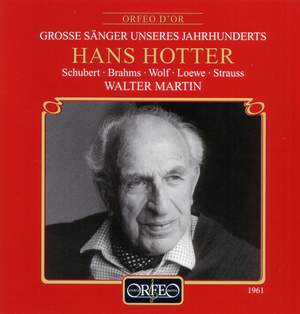
| |  | Hans Hotter - Lieder
Brahms: | Auf dem Kirchhofe, Op. 105 No. 4 Sapphische Ode, Op. 94 No. 4 Sonntag, Op. 47 No. 3 Botschaft, Op. 47 No. 1 | Loewe, C: | Der Erlkönig, Op. 1 No. 3 (Goethe) Die wandelnde Glocke, Op. 20 No..3 Hochzeitlied, Op. 20 No. 1 | Schubert: | Grenzen der Menschheit, D716 Wandrers Nachtlied II 'Über allen Gipfeln ist Ruh', D768 Geheimes, D719 (Goethe) Prometheus, D674 (Goethe) Sei mir gegrüsst! D741 (Rückert) Am Bach im Fruhling, D361 Des Fischers Liebesgluck, D933 (Leitner) Alinde, D904 Gruppe aus dem Tartarus, second version, D583 (Schiller) | Strauss, R: | Himmelsboten zu Liebchens Himmelbett, Op. 32 No. 5 Ach weh mir unglückhaftem Mann, Op. 21 No. 4 Nichts, Op. 10 No. 2 | Wolf, H: | So lang man nüchtern ist (No. 36 from Goethe-Lieder) Ob de Koran von Ewigkeit sei? (No. 34 from Goethe-Lieder) Der verzweifelte Liebhaber (No. 14 from Eichendorff-Lieder) |
| | | Usually despatched in 3 - 4 working days. |
|
|
| |  | Hans Hotter - Lieder Recital
Brahms: | Wie Melodien zieht es mir, Op. 105 No. 1 Sonntag, Op. 47 No. 3 Komm bald, Op. 97 No. 5 (Groth) Wir wandelten, wir zwei zusammen Op. 96/2 Wie bist du, meine Königin Op. 32 No. 9 Heimkehr, Op. 7 No. 6 Wenn du nur Zuweilen lächelst (No. 2 from Acht Lieder und Gesänge, Op. 57) Verrat, Op. 105 No. 5 | Loewe, C: | Edward, Op. 1 No. 1 (Herder) Der Erlkönig, Op. 1 No. 3 (Goethe) Odins Meeresritt "Meister Oluf, der Schmied auf Helgoland", Op. 118 Die wandelnde Glocke, Op. 20 No..3 Hinkende Jamben, Op. 62 No. 5 | Pfitzner: | Der Gärtner (Eichendorff) | Schubert: | An die Musik D547 Ständchen 'Leise flehen meine Lieder', D957 No. 4 Abschied, D 957 No. 7 Im Frühling, D882 Wandrers Nachtlied II 'Über allen Gipfeln ist Ruh', D768 | Schumann: | Wer machte dich so krank? Op.35 No.11 (Kerner) Alte Laute, Op. 35, No. 12 Erstes Grün, Op. 35 No. 4 Die beiden Grenadiere, Op. 49 No. 1 Mondnacht (No. 5 from Liederkreis, Op. 39) | Strauss, R: | Ach weh mir unglückhaftem Mann, Op. 21 No. 4 Ich trage meine Minne, Op. 32 No. 1 |
| | | Usually despatched in 4 - 5 working days. |
|
|
| |  | Carl Loewe: Ausgewahlte BalladenSonder-Edition Robert Holl Edition Vol. 6
Loewe, C: | Der Erlkönig, Op. 1 No. 3 (Goethe) Herr Oluf "Herr Oluf reitet spät und weit", Op. 2/2 Die Uhr, Op. 123 No. 3 Die wandelnde Glocke, Op. 20 No..3 Kleiner Haushalt, Op. 71 Odins Meeresritt "Meister Oluf, der Schmied auf Helgoland", Op. 118 Wandrers Nachlied, Op. 9 No. 3a Wandrers Nachlied, Op. 9 No. 3b Meeresleuchten, Op. 145 No. 1 Der Feind (Der Marsch), Op. 145 No. 2 Im Sturme, Op. 145, No. 3 Heimlichkeit, Op. 145, No. 4 Reiterlied, Op. 145, No. 5 Der gefangene Admiral op. 115 |
| | | Usually despatched in 2 - 3 working days. |
|
|
| |  | Hans Hotter: The Great Bass-Baritone
Bach, J S: | Cantata BWV82 'Ich habe genug' recorded 22-24/3/1950 Philharmonia Orchestra, Anthony Bernard | Brahms: | Vier ernste Gesänge, Op. 121 recorded 11-12/11/1951 Feldeinsamkeit, Op. 86 No. 2 Mit vierzig Jahren, Op. 94 No. 1 Wie Melodien zieht es mir, Op. 105 No. 1 Sonntag, Op. 47 No. 3 Minnelied Op. 71 No. 5 Wir wandelten, wir zwei zusammen Op. 96/2 Wie bist du, meine Königin Op. 32 No. 9 Komm bald, Op. 97 No. 5 (Groth) Heimkehr, Op. 7 No. 6 Wenn du nur Zuweilen lächelst (No. 2 from Acht Lieder und Gesänge, Op. 57) Sapphische Ode, Op. 94 No. 4 Botschaft, Op. 47 No. 1 Ständchen, Op. 106 No. 1 Heimweh, Op. 63 No. 8 Auf dem Kirchhofe, Op. 105 No. 4 Verrat, Op. 105 No. 5 In Waldeseinsamkeit, Op. 85 No. 6 Sommerabend, Op. 85 No. 1 Mondenschein, Op. 85 No. 2 | Grieg: | Ich liebe Dich, Op. 5 No. 3 | Loewe, C: | Edward, Op. 1 No. 1 (Herder) Der Erlkönig, Op. 1 No. 3 (Goethe) Odins Meeresritt "Meister Oluf, der Schmied auf Helgoland", Op. 118 Die wandelnde Glocke, Op. 20 No..3 Hinkende Jamben, Op. 62 No. 5 | Pfitzner: | Der Gärtner (Eichendorff) | Schubert: | Winterreise D911 recorded 24-29/5/1954 An die Musik D547 Meeres Stille, D216, Op. 3 No. 2 (Goethe) Im Frühling, D882 Am Bach im Fruhling, D361 Gruppe aus dem Tartarus, second version, D583 (Schiller) Geheimes, D719 (Goethe) Sei mir gegrüsst! D741 (Rückert) Im Abendrot, D799 Wandrers Nachtlied I 'Der du von dem Himmel bist', D224 Wandrers Nachtlied II 'Über allen Gipfeln ist Ruh', D768 Wohin? (No. 2 from Die schöne Müllerin, D795) | Schumann: | Wer machte dich so krank? Op.35 No.11 (Kerner) Alte Laute, Op. 35, No. 12 Erstes Grün, Op. 35 No. 4 Die beiden Grenadiere, Op. 49 No. 1 Mondnacht (No. 5 from Liederkreis, Op. 39) | Strauss, R: | Ach weh mir unglückhaftem Mann, Op. 21 No. 4 Ich trage meine Minne, Op. 32 No. 1 | Wolf, H: | Der Tambour (No. 5 from Mörike-Lieder) Ob de Koran von Ewigkeit sei? (No. 34 from Goethe-Lieder) So lang man nüchtern ist (No. 36 from Goethe-Lieder) Schon streckt' ich aus (No. 27 from Italienisches Liederbuch) Ein Ständchen Euch zu bringen kam ich her (No. 22 from Italienisches Liederbuch) Anakreons Grab (No. 29 from Goethe-Lieder) Songs (3) on poems by Michelangelo Buonarroti Cophtisches Lied I (No. 14 from Goethe-Lieder) Cophtisches Lied II (No. 15 from Goethe-Lieder) Grenzen der Menschheit (No. 51 from Goethe-Lieder) Prometheus (No. 49 from Goethe-Lieder) Harfenspieler I (No. 1 from Goethe-Lieder) Harfenspieler II (No. 2 from Goethe-Lieder) Harfenspieler III (No. 3 from Goethe-Lieder) Geselle, woll’n wir uns in Kutten hüllen (No. 14 from Italienisches Liederbuch) Verborgenheit (No. 12 from Mörike-Lieder) Der Musikant (No. 2 from Eichendorff-Lieder) Fussreise (No. 10 from Mörike-Lieder) Nimmersatte Liebe (No. 9 from Mörike-Lieder) |
plus excerpts of operas by Orff, R Strauss & Wagner
Hans Hotter was one of the major artists signed to EMI by the legendary record producer Walter Legge in Vienna as soon as the Second World War ended and one of his first recordings for the company was the Brahms Requiem under Herbert von Karajan, an extract from which is included in this set. This 6-CD set is devoted mainly to German Lieder and includes an impressive collection of songs recorded when Hotter was in his prime and generally accompanied by Gerald Moore. A number of tracks in this set are appearing in stereo for the first time on CD; their only previous stereo issue was on a local Angel LP in the USA.The two excerpts from Die Meistersinger are incomplete because the recordings were not released at the time they were made (1948) and some of the original 78 rpm masters had not survived by the time the items were issued on LP for the first time in 1982. Recorded 1947-1957. Some works in mono. | | | In stock - usually despatched within 1 working day. |
|
|
| |  | Hermann Prey: A Life in Song
Bach, J S: | Cantata BWV82 'Ich habe genug' Siegfried Arnold (cello), Heinz Morawietz (double bass), Willy Gerlach (oboe), Hannes Kästner (organ) Gewandhaus-Orchester Leipzig, Kurt Thomas | Beethoven: | Adelaide, Op. 46 Marmotte, Op. 52 No. 7 Der Kuss, Op. 128 An die Hoffnung, Op. 94 Neue Liebe, Neues Leben, Op. 75, 2 Mephistos Flohlied, Op. 75, 3 Gerald Moore (piano) | Berlin, I: | They say it's wonderful Symphonie-Orchester Graunke, Carl Michalski | Bizet: | Votre toast je peux vous le rendre 'Toreador Song' (from Carmen) Sung in German as 'Euren Toast!...Auf inden Kampf' Ursula Schirrmacher (Frasquita), Ursula Gust (Mercedes), Christa Ludwig (Carmen) Berliner Symphoniker, Chor der Deutschen Oper Berlin, Horst Stein | Brahms: | Wach auf meins Herzens Schone, WoO posth. 35 No. 2 Erlaube mir, fein's Mädchen (No. 2 from Deutsche Volkslieder WoO 33) Feinsliebchen, du sollst mir nicht barfuß gehen (No. 12 from Deutsche Volkslieder, WoO 33) All mein Gedanken, die ich hab (No. 30 from Deutsche Volkslieder, WoO 33) Es steht ein Lind (No. 41 from Deutsche Volkslieder, WoO 33) Mein Mädel hat einen Rosenmund (No. 25 from Deutsche Volkslieder, WoO 33) Die Sonne scheint nicht mehr (No. 5 from Deutsche Volkslieder, WoO 33) Der bucklichte Fiedler (No. 1 from Sechs Lieder und Romanzen, Op. 93a) Da unten im Tale (No. 6 from Deutsche Volkslieder, WoO 33) Schöner Augen, schöne Strahlen (No. 39 from Deutsche Volkslieder) Ach, englische Schäferin (No. 8 from Deutsche Volkslieder, WoO 33) In stiller Nacht (No. 42 from Deutsche Volkslieder, WoO 33) Martin Mälzer (piano) | Flotow: | Martha: Lasst mich euch fragen (Porterlied) Bayerisches Staatsorchester, Chor der Bayerischen Staatsoper, Robert Heger | Gluck: | Che faro' senza Euridice? (from Orfeo ed Euridice) Sung in German as 'Ach, ich habe sie verloren' Berliner Symphoniker, Horst Stein | Gounod: | Avant de quitter ces lieux (from Faust) Sung in German as 'Da ich nun verlassen soll' Berliner Symphoniker, Wilhelm Schüchter | Humperdinck: | Verdorben! Gestorben! (from Königskinder) Berliner Symphoniker, Berliner Mozartchor, Horst Stein | Keiser: | Prangt die allerschönste Blume (from Der hochmüthige, gestürzte und wieder erhabene Croesus) Götter, übt Barmherzigkeit (from Der hochmüthige, gestürzte und wieder erhabene Croesus) Berliner Philharmoniker, Wilhelm Brückner-Rüggerberg | Korngold: | Mein Sehnen (from Die tote Stadt) Berliner Symphoniker, Horst Stein | Kreutzer, K: | Ein Schütz' bin ich (from Das Nachtlager von Granada) Die Nacht ist schön...Fürwahr es ist ein Abenteuer (from Das Nachtlager von Granada) Berliner Symphoniker, Chor der Deutschen Oper Berlin, Wilhelm Schüchter | Leoncavallo: | Nedda! Silvio! A quest'ora che imprudenza (from I Pagliacci) Anneliese Rothenberger (Nedda) Berliner Symphoniker, Wilhelm Schüchter | Liszt: | Es muss ein Wunderbares sein, S. 314 Ein Fichtenbaum steht einsam, S309 Ihr Auge (Rellstab) Die Vätergruft, S.281 Anfangs wollt ich fast verzagen, S311 Lasst mich ruhen Morgens steh ich auf und frage, S290 Über allen Gipfeln ist Ruh (Wandrers Nachtlied II), S.306 Der du von dem Himmel bist (Goethe), S279 Die drei Zigeuner, S.320 Blume und Duft Wer nie sein Brot mit Tränen ass, S.297 Die Fischerstochter Sonetti di Petrarca (3) for voice & piano, S270 Alexis Weissenberg (piano) | Loewe, C: | Der Schatzgräber, Op. 59 No. 30 Karl Engel (piano) Herr Oluf "Herr Oluf reitet spät und weit", Op. 2/2 Der Erlkönig, Op. 1 No. 3 (Goethe) Die wandelnde Glocke, Op. 20 No..3 Hochzeitlied, Op. 20 No. 1 Der getreue Eckart, Op. 44 No. 2 Archibald Douglas, Op. 128 Tom der Reimer "Der Reimer Thomas lag am Bach", Op. 135a Heinrich der Vogler, Op. 56 No. 1 Graf Eberstein Prinz Eugen, der edle Ritter, Op. 92 Gunther Weissenborn (piano) | Loewe, F: | My Fair Lady: On the street where you live Symphonie-Orchester Graunke, Carl Michalski | Lortzing: | Verraten! Von euch verraten!...Die Macht des Zepters (from Zar und Zimmermann) Wie freundlich strahlt...Heiterkeit und Fröhlichkeit (from Der Wildschütz) Berliner Symphoniker, Horst Stein Nun ist's vollbracht!...Schwanensang, Schwanenklang (from Undine) Radio-Sinfonie-Orchester Berlin, RIAS-Kammerchor, Robert Heger | Marschner, H A: | An jenem Tag (from Hans Heilig) Berliner Symphoniker, Wilhelm Schüchter | Millöcker: | Gasparone (highlights) Anneliese Rothenberger (Carlotta) Symphonie-Orchester Graunke, Chor des Theaters am Gärtnerplatz, München, Carl Michalski Und da soll man noch galant sein (from Der Bettelstudent) Mit Geld und guten Worten (from Der Bettelstudent) Symphonie-Orchester Graunke, Franz Allers | Mozart: | La ci darem la mano (from Don Giovanni) Sung in German as 'Reich mir die Hand, mein Leben' Erika Köth (Zerlina) Fin ch'han dal vino (from Don Giovanni) Sung in German as 'Auf denn zum Feste' Deh! vieni alla finestra (from Don Giovanni) Sung in German as 'Feinsliebchen, komm ans Fenster' Berliner Symphoniker, Hans Zanotelli Der Vogelfänger bin ich, ja (from Die Zauberflöte) Ein Mädchen oder Weibchen (from Die Zauberflöte) Berliner Symphoniker, Horst Stein Hai gia vinta la causa! (from Le nozze di Figaro) Sung in German as 'Der Prozeß schon gewonnen...Ich soll ein Glück entbehren' Berliner Symphoniker, Berislav Klobucar Donne mie la fate a tanti (from Così fan tutte) Sung in German as 'Mädchen, so treibt ihr's mit allen' Nordwestdeutsche Philharmonie, Wilhelm Schüchter | Nessler: | Möchte in die Ferne Schweifen (from Der Trompeter von Säkkingen) Trompeter von Säkkingen: Behüt dich Gott Berliner Symphoniker, Chor der Deutschen Oper Berlin, Wilhelm Schüchter | Porter, C: | So in Love Symphonie-Orchester Graunke, Carl Michalski | Reichardt, J F: | Heideröslein Karl Engel (piano) Blumengruß Karl Engel (piano) | Rodgers, R: | If I Loved You (from Carousel) Symphonie-Orchester Graunke, Carl Michalski | Rossini: | Largo al factotum (from Il barbiere di Siviglia) Sung in German as 'Ich bin das Faktotum' All'idea di quel metallo (from Il barbiere di Siviglia) Sung in German as 'Strahlt auf mich der Blitz des Goldes' Richard Holm (Almaviva) Dunque io son? (from Il Barbiere di Siviglia) Sung in German as 'Also ich, meinst du es wirklich?' Erika Köth (Rosina) Berliner Symphoniker, Wilhelm Schüchter | Schubert: | Hoffnung, D637 An den Fruhling, D283 (Schiller) Der Alpenjäger, D588 (Schiller) Sehnsucht, D52 Gruppe aus dem Tartarus, second version, D583 (Schiller) Der Pilgrim, D794 (Schiller) Der Musensohn, D764 (Goethe) Der Rattenfänger, D255 Geheimes, D719 (Goethe) Harfenspieler I D325 (Goethe) Ganymed, D544 (Goethe) Wandrers Nachtlied I 'Der du von dem Himmel bist', D224 Gerald Moore (piano) Winterreise D911 Karl Engel (piano) Tischlied, D234 Karl Engel (piano) Prometheus, D674 (Goethe) Karl Engel (piano) Der Goldschmiedsgesell, D560 Karl Engel (piano) | Schumann: | Dichterliebe, Op. 48 Karl Engel (piano) Gedichte (12) von Justinus Kerner Op. 35 Karl Engel (piano) Liederkreis, Op. 39 Karl Engel (piano) Sonntags am Rhein, op. 36 No. 1 Karl Engel (piano) | Spohr: | Ah Mignon!, Op. 41 No. 3 Karl Engel (piano) | Strauss, J, II: | Her die Hand, es mußja sein (from Der Zigeunerbaron) Als flotter Geist (from Der Zigeunerbaron) Einst träumte mir (from Fürstin Ninetta) Stadt der Liebe, Stadt der Freuden (from Casanova) In Hispaniens heißem Sonnenland (from Casanova) Symphonie-Orchester Graunke, Franz Allers | Strauss, R: | Sie woll'n mich heiraten, sagt mein Vater (from Arabella) Anneliese Rothenberger (Arabella) Symphonie-Orchester Graunk, Kurt Graunke Ach, so versuchet doch ein kleines Lied (from Ariadne auf Naxos) Sylvia Geszty (Zerbinetta) Staatskapelle Dresden, Rudolf Kempe | Suppe: | Boccaccio: excerpts Anneliese Rothenberger (Fiametta), Heinz Hoppe (Pietro), Hans Günther Grimm (Lambertuccio) ymphonie-Orchester Graunke, Carl Michalski | Tchaikovsky: | Uzhel ta samaya Tatyana (from Eugene Onegin) Sung in German as 'Ist dies denn wirklich die Tatjana?' Ya vas lyublyu 'Yeletsky’s aria' (from Pique Dame) Sung in German as 'Als deine Liebe du mir schenktest' Bayerisches Staatsorchester, Meinhard von Zallinger | Wagner: | Wie Todesahnung...O du, mein holder Abendstern (from Tannhäuser) O du, mein holder Abendstern (from Tannhäuser) Berliner Symphoniker, Horst Stein | Weber: | Die Zeit Op. 13:5 Meine Lieder, meine Sänge, J. 73 (Op. 15 No. 3) Klage ('Ein steter Kampf'), J. 63 (Op. 15 No. 2) Was zieht zu deinem Zauberkreise, J. 68 (Op. 15. No. 4) Das Röschen ('Ich sah ein Röschen am Wege steh’n'), J. 67 (Op. 15 No. 5) Er an Sie, J. 57 (Op. 15 No. 6) Meine Farben, J. 62 (Op. 23 No. 1) Liebe-Glühen, J. 140 (Op. 25 No. 1) Es stürmt auf der Flur, J. 161 (Op. 30 No. 2) Die Temperamente bei dem Verluste der Geliebten Leonard Hokanson (piano) | Zeller: | Gleich und gleich Karl Engel (piano) |
and a selection of German Folk and Wayfarer Songs
The German baritone Hermann Prey was born in Berlin in 1929. In a career that spanned some 48 years, he became one of the most popular singers of his time and formed a great bond with his audiences through his unaffected and natural style of singing and his personal charm and acting ability. His repertoire was extremely wide and encompassed all the classic German Lieder, as well as a whole range of operatic roles from the lively Figaro of both Mozart and Rossini to more serious baritone parts in Verdi and Wagner, although it is in the lighter roles that he is most affectionately remembered. He enjoyed great success in the world’s major opera houses including Vienna, Bayreuth, Salzburg, Munich, Milan and New York, and also appeared frequently on German TV and in opera films. He died in 1998. CD 1 begins with two groups of Lieder by Schubert to words by Schiller and Goethe, followed by a selection of 12 Deutsche Volkslieder by Brahms, while CD 2 contains a complete performance of Schubert’s great song cycle Winterreise. CD 3 is devoted to Schumann, including Dichterliebe and songs with words by Kerner, and CD 4 opens with Schumann’s Liederkreis before going on to a collection of songs by Weber. CD 5 presents six songs by Beethoven, starting with the popular ‘Adelaide’, and these are followed by a group of songs by Liszt, concluding with his setting of Three Sonnets by Petrarch. CD 6 begins with a group of songs by various composers all to words by Goethe that were recorded in 1974 but issued for the first time in 1998 as a tribute to Prey at the time of his death. These are followed by a very attractive selection of German Folk and Wayfarer songs that show Prey in lighter mood. In CD7 we have a group of ten descriptive ballads by Loewe including his setting of Goethe’s ‘Erlkönig’ and the traditional Scottish poem ‘Tom der Reimer’ (Tom the Rhymer). This CD ends with a magnificent performance of Bach’s Cantata Ich habe genug with the Orchestra of the Leipzig Gewandhaus conducted by Kurt Thomas that illustrates Prey ‘s talent for German liturgical music and oratorio. With CD 8 we move to opera in a wide range of repertoire from Baroque and Classical works by Keiser, Gluck and Mozart to the Romantic music of Wagner and Humperdinck. All the arias from French and Italian operas are sung in German, as was the practice in German opera houses at the time these recordings were made. CD 9 brings us to some more modern operatic items by Leoncavallo Richard Strauss and Korngold and then two powerful arias by Tchaikovsky, after which the mood lifts with extracts from the operettas Gasparone by Millöcker and Boccaccio by Suppé. Finally we have four romantic songs from American musicals that Prey sings in fine idiomatic style. On this CD we also hear Prey’s frequent partner in both opera and operetta, the much loved soprano Anneliese Rothenberger, in several duets. The final CD begins with arias from a number of German so-called ‘Spielopern’ by Kreutzer, Nessler and Lortzing before concluding in high spirits with items from operettas by those two masters of the genre, Johann Strauss II and Carl Millöcker. | | | In stock - usually despatched within 1 working day. |
|
|
| |
|