Prices shown exclude VAT. (UK tax is not payable for deliveries to United States.) See Terms & Conditions for p&p rates. | |  | Britten Rarities
This collection brings together rarities and surprises from the Decca/Argo Britten discography, a collection notable as much for the infrequency with which much of this music is performed, as it is for the fact that many of these are world-premiere recordings of Britten’s music. The source material itself is extremely rare and virtually every recording represented here is, in its LP/EP format, a collector’s item, largely from the Argo catalogue. The all-vocal program opens with Voices for Today which Britten wrote to mark the 20th anniversary of the founding of the United Nations. His devotion to excellent music for children is represented by a collection of songs, including five from Friday Afternoons and sung by the boy alto John Hahessy. It was Hahessy who was chosen over Norma Procter to sing the alto part in Britten’s Canticle II ‘Abraham and Isaac’. The earlier Procter/Pears/Britten version, recorded in 1957 but not released at the time in favour of the Hahessy recording; it is included on this collection. In later years, it was perhaps inevitable that other British singers would be compared with those who created and inspired Britten’s work, notably Ferrier, particularly after her early death. Pamela Bowden was one of those singers: she studied with Ferrier’s teacher, Roy Henderson, in London, and was hailed as the singer’s successor. She is represented by A Charm of Lullabies and it seemed sensible to include the remainder of the music on her original EP – two songs by Purcell – as bonus tracks for this release. A rare spoken-word appearance is made by author (and speaker) T.H. White, who reads an extract from his book The Sword in the Stone to an accompaniment of Britten’s music. “Britten's underrated United Nations anthem Voices for Today makes it onto disc at last, together with vintage recordings of artists the composer chose to work with.” BBC Music Magazine, October 2012 **** “John Hahessy has a splendid strong tone, almost brassy in forte, and a blessedly unaffected style: none of those cautious hoots and beautifully modulated vowels that are the bane of the English choirboy tradition. What is more he evidently has a real natural musicality, to judge by his moulding of phrases throughout this disc.” Gramophone Magazine (Friday Afternoons) “admirably read by the author, with a delightful mixture of sardonic humour and delicate description. The atmosphere is heightened by the music of Benjamin Britten, which brilliantly sharpens the word-pictures. […] It is all charming and will give great pleasure to young and old, for its story and the way it is told and for Britten's delicate score.” Gramophone Magazine (The Sword in the Stone) “Britten's songs were written in 1947 for Nancy Evans, and it might be thought that they need rather more mezzo than contralto tone. But Miss Bowden sings them with no apparent strain, and her characterisation of each one is [very] successful … Her voice is not yet as opulent as Kathleen Ferrier's, but her dramatic sense is possibly more developed.” Gramophone Magazine (A Charm of Lullabies, Purcell) “In advance of Britten’s centenary, a deep draught of the strong wine of his sensibility. The items are mostly first releases on CD, from the margins of his recorded oeuvre...The boy alto John Hahessy is sumptuous in songs from Friday Afternoons” Sunday Times, 22nd July 2012 | | | (Sorry, download not available in your country) | In stock - usually despatched within 1 working day. |
|
|
| |  | Purcell: Songs and Sacred Arias
Purcell: | Tell me, some pitying angel (The Blessed Virgin's Expostulation), Z196 Music for a while, Z583 Let the dreadful engines (from Don Quixote, Z578) Thrice happy lovers (An Epithalamium) If music be the food of love, Z379 Not all my torments can your pity move, Z400 Close thine eyes and sleep secure, Z184 Fairest Isle (from King Arthur) Sweeter than Roses (from Pausanius, the Betrayer of his Country, Z585) The fatal hour comes on apace, Z421 Crown the altar (from Celebrate this Festival - Birthday Ode for Queen Mary, Z321) I attempt from love's sickness to fly in vain (from The Indian Queen) O lead me to some peaceful gloom (from Bonduca or The British Heroine, Z574) What shall I do to show how much I love her? (from Prophetess or The History of Dioclesian, Z627) From Rosy Bow'rs (from Don Quixote) Sonata 9 in F major Pavan a3 |
A collection of Purcell’s songs and sacred arias given by the Deller Consort. 12 of the 18 tracks feature the inimitable voice of Alfred Deller. 'The most remarkable countertenor of the 20th Century' Sir Michael Tippett “This reissue of recordings by the Deller Consort (founded in 1950) reminds us of his wonderfully pure and supple, if undramatic, voice, and his firmness and intensity of line (a quality absolutely required in Purcell’s songs, but too often missing)...April Cantelo’s performance of The Blessed Virgin’s Expostulation, that miniature cantata of genius, is a delight.” Sunday Times, 3rd April 2011 *** | | | In stock - usually despatched within 1 working day. |
|
|
| |  | Alfred Deller - Portrait of a Voice
Included in the documentary - Alfred Deller sings in public. Back in 1975 Benoit Jacquot, then a very young director met up with Alfred Deller to make this documentary-interview, which offers one of the very few filmed documents of the most famous countertenor of the modern era. The DVD is accompanied by a bonus CD featuring studio recordings of some of the pieces sung in concert in the film. “…Deller… answers questions about his own life and career, the history of the countertenor, and how the voice is produced. Whilst beguiled by his clear, expressive voice, we can study his eloquent gestures as he sings. CD and DVD show clearly how and why Deller was the champion (in all senses) of the countertenor voice previously unregarded by the general public and confined for centuries to English church choirs.” BBC Music Magazine, July 2009 **** | | | In stock - usually despatched within 1 working day. |
|
|
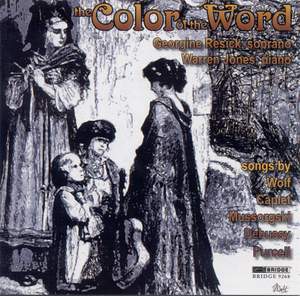
| |  | The Color of the Word
This new disc on Bridge presents songs by some of the greatest masters of the art of setting poetry to music. With the exception of Purcell's songs, the repertoire heard here grows out of the 19th century German Romantic Lied tradition. Soprano Georgine Resick and pianist Warren Jones have collaborated on several discs for Bridge in the past and are known for their fascinating thematic programming. This recital follows in that tradition, showing unusual contrasts and similarities between diverse repertoire. | | | In stock - usually despatched within 1 working day. |
|
|
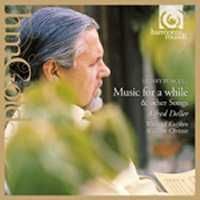
| |  | Music for a whilePurcell songs
Purcell: | Plainte - O, Let Me Weep (from The Fairy Queen, Z629) If music be the food of love, Z379 I attempt from love's sickness to fly in vain (from The Indian Queen) Fairest Isle (from King Arthur) Sweeter than Roses (from Pausanius, the Betrayer of his Country, Z585) Not all my torments can your pity move, Z400 Thrice happy lovers (An Epithalamium) An Evening Hymn 'Now that the sun hath veiled his light', Z193 From Rosy Bow'rs (from Don Quixote) O lead me to some peaceful gloom (from Bonduca or The British Heroine, Z574) The History of King Richard the Second or The Sicilian Usurper: Retir'd from any mortal's sight, Z581 Music for a while, Z583 Since from my dear Astrea's sight (from Prophetess or The History of Dioclesian, Z627) O solitude, my sweetest choice, Z406 |
| | | In stock - usually despatched within 1 working day. |
|
|
| |  | ApparitionMusic by George Crumb & Henry Purcell
“Given Christine Schäfer's wide-ranging repertoire, this mixing of 17th-century English and 20th-century American songs is no surprise. Her exemplary clarity of tone and diction, and her emotional commitment to both composers, make for a powerful recital.” BBC Music Magazine, January 2008 **** “The first part of the disc intersperses Crumb's moderately Coplandesque Three Early Songs (1947) with Purcell favourites like "Sweeter than Roses" and "Music for a While". The sovereign authority of Schäfer's voice and the intensity of her presence makes for a seamless narrative, and the clarity of her diction and innate dramatic sensibility revitalise the Purcell works.” Gramophone Magazine, March 2008 | | | In stock - usually despatched within 1 working day. |
|
|
| |  | Songs and Airs by Purcell
Purcell: | O solitude, my sweetest choice, Z406 Ah! how sweet it is to love (from Tyrannic Love or The Royal Martyr, Z613) Not all my torments can your pity move, Z400 Stript of their green our groves appear, Z444 Tell me, some pitying angel (The Blessed Virgin's Expostulation), Z196 If music be the food of love, Z379 Hark! The Echoing Air (from The Fairy Queen, Z629) The fatal hour comes on apace, Z421 Incassum Lesbia, incassum rogas ('The Queen's Epicedium'), Z383 Sweeter than Roses (from Pausanius, the Betrayer of his Country, Z585) Cupid, the slyest rogue alive, Z367 From silent shades ('Bess of Bedlam') Z370 Dear pretty youth (from The Indian Queen, Z630) From Rosy Bow'rs (from Don Quixote) An Evening Hymn 'Now that the sun hath veiled his light', Z193 Beneath a poplar's shadow (from Sophonisba or Hannibal's Overthrow, Z590) I attempt from love's sickness to fly in vain (from The Indian Queen) Let us dance (from Prophetess or The History of Dioclesian, Z627) Fairest Isle (from King Arthur) Nymphs and Shepherds, Z600 Amidst the shades and cool refreshing streams Z355 Love in their little veins inspires (from Timon of Athens, Z632) Fly swift ye hours, Z369 They tell us that your mighty powers, Z630 Plainte - O, Let Me Weep (from The Fairy Queen, Z629) In the black dismal dungeon of despair, Z190 See, even Night herself is here (from King Arthur, Z628) Why should men quarrel? (from The Indian Queen, Z630) Seek not to know (from The Indian Queen, Z630) The History of King Richard the Second or The Sicilian Usurper: Retir'd from any mortal's sight, Z581 To arms, heroic Prince (from The Libertine Destroyed, Z600) O lead me to some peaceful gloom (from Bonduca or The British Heroine, Z574) Halcyon days (from King Arthur, Z629) Bid the virtues (from Come ye Sons of Art, Z323) Lord, what is man?, Z192 Music for a while, Z583 Sawney is a bonny lad, Z412 When I have often heard young maids complaining (from The Fairy Queen, Z629) Ah! cruel, bloody fate (from Theodosius or The Force of Love, Z606) Thy hand, Belinda … When I am laid in earth (from Dido & Aeneas) |
| | | In stock - usually despatched within 1 working day. |
|
|
| |  | Lunarcy - Songs of Madness and the Moon
Lawrence Zazzo is regarded as the most versatile operatic countertenor of his generation. Here he explores the intimacy of the lute song in a remarkable programme focusing on madness and midnight. He performs works by Dowland and Purcell as well as exploring the contemporary repertoire for countertenor. “Zazzo's voice is pure, strong and individual....For the most part, [he] is a convincing storyteller. Indeed, he fits Burgon's cycle and Boyle's Two Love Lyrics into a cohesive, highly satisfying musical and poetic narrative. Noiri's accompaniments are clear, keen-edged and beautifully articulated” BBC Music Magazine, October 2011 **** “Zazzo and Noiri thrive in this madhouse of a recital, their respective instruments as well adapted to bringing out the subtleties and ambiguities inherent in a de la Mare, Auden or MacNiece poem as in the discords that infect the melodiousness of Dowland and Burgon alike. Lunarcy it may be, 'though this be madness, yet there is method in't '” International Record Review, September 2011 | | | Usually despatched in 2 - 3 working days. |
|
|
| |  | Endless Pleasure
Handel: | Terpsichore: ballet music Semele: O, Sleep Why Dost Thou Leave Me? Semele: Where'er you walk Semele: Endless Pleasure Care selve (from Atalanta) V' adoro, pupille (from Giulio Cesare) E pur così in un giorno ... Piangerò, la sorte mia (from Giulio Cesare in Egitto) Da tempeste il legno infranto (from Giulio Cesare) | Purcell: | Music for a while, Z583 Sweeter than Roses (from Pausanius, the Betrayer of his Country, Z585) If music be the food of love, Z379 From Rosy Bow'rs (from Don Quixote) Lord, what is man?, Z192 Thy hand, Belinda … When I am laid in earth (from Dido & Aeneas) |
Endless Pleasure, Barbara Hendricks' first disc with orchestra for her new label Arte Verum, is also her first solo CD of baroque music. Rediscover one of the great voices of our time in opera arias by Purcell and Handel in what is for her an entirely novel repertoire on disc. “The American-Swedish soprano Barbara Hendricks hits 50 this year, and her voice, though mature, remains rich and lovely, with a full range and some attractive half tones.” Gramophone Magazine, January 2008 *** | | | Usually despatched in 3 - 4 working days. |
|
|
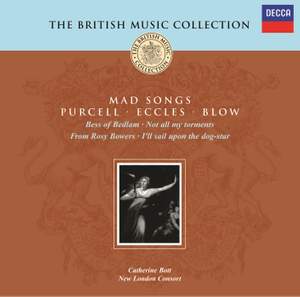
| |  | Purcell: | Now the night is chac'd away (from The Fairy Queen, Z629) If love's a sweet passion (from The Fairy Queen, Z628) Fairest Isle (from King Arthur) Strike the Viol (from Come Ye Sons of Art, Z323) Air (Instrumental From King Arthur) The Fairy Queen, Z. 629: Overture in D major When I am laid in earth (from Dido and Aeneas) An Evening Hymn 'Now that the sun hath veiled his light', Z193 Music for a while, Z583 Chaconne (From King Arthur) Shepherd, leave decoying (from King Arthur, Z628) Third Act Hornpipe (From King Arthur) Prelude (From The Fairy Queen) One charming night (from The Fairy Queen, Z629) First Music (From The Fairy Queen) How blest are the shepherds (from King Arthur) From Rosy Bow'rs (from Don Quixote) Trumpet Tune (From King Arthur) Hark! The Echoing Air (from The Fairy Queen, Z629) |
| | | (also available to download from $10.50) | Usually despatched in 2 - 3 working days. (Available now to download.) |
|
|
| |
|