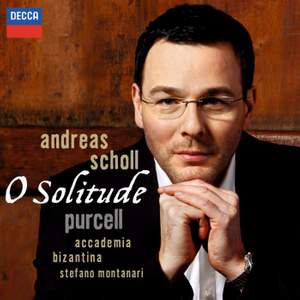
Prices shown exclude VAT. (UK tax is not payable for deliveries to United States.) See Terms & Conditions for p&p rates. | |  | Andreas Scholl: Purcell - O Solitude
Purcell: | If music be the food of love, Z379 Sound the trumpet, beat the drum, Z335 with Christophe Dumaux (countertenor) Strike the Viol (from Come Ye Sons of Art, Z323) Fairest Isle (from King Arthur) Chacony, Z628 What power art thou? (from King Arthur, Z628) Chacony in G minor - for Two Violins, Viola and Bass Z730 One charming night (from The Fairy Queen, Z629) Sweeter than Roses (from Pausanius, the Betrayer of his Country, Z585) [Pausanius, the Betrayer of his Country. (1695), Z585 original version] An Evening Hymn 'Now that the sun hath veiled his light', Z193 Pavan for Three Violins and Bass in G minor - Z752 O solitude, my sweetest choice, Z406 O dive custos Auriacae domus, Z504 with Christophe Dumaux (countertenor) Music for a while, Z583 Here the deities approve, Z339 original version The Gordion Knot Untied - incidental music, Z597 When I am laid in earth (from Dido and Aeneas) |
The greatest countertenor of today, Andreas Scholl returns to the Decca label with a recording of vocal jewels by the great baroque composer, Henry Purcell. This is Andreas Scholl's first ever recording of the music of Purcell and his uniquely beautiful voice is perfectly suited to the English composer's plangent melodies. The album includes pieces written for the stage, the church and the private chamber, some of which Andreas Scholl has sung in recital for many years, and some he sings for the first time. Andreas Scholl's long-standing collaborators, ‘Accademia Bizantina’ bring out the Italian influence in Purcell's instrumental writing, and contribute orchestral items to the programme. 'O Solitude' is Andreas Scholl's first Decca album since the chart-topping ‘Handel: Arias For Senesino' in 2006. The album includes the well known lament 'When I Am Laid In Earth' - recently voted the UK's No.1 favourite aria in a BBC Radio 3 poll - written for the character of Dido in Purcell's opera, Dido and Aeneas. Andreas Scholl is joined for two duets by French countertenor Christophe Dumaux. “Ethereal yet visceral, Scholl's voice is the dream vehicle for Purcell...Stefano Montanari coaxes thrilling playing from Accademia Bizantina, who dance and swagger, throb and pulsate with true Latin passion. Their continuo realisations - here delicate and intimate, there audaciously jazzy - are an unceasing delight.” BBC Music Magazine, January 2011 ***** “that famously otherworldly tone [is] often breathtakingly in evidence...His decision to tackle Dido's lament has generated controversy: in fact, his performance is extraordinarily haunting...O Dive Custos is arguably the disc's high point. The Academia Bizantina, meanwhile, are on fine form for Stefano Montanari” The Guardian, 13th January 2011 **** “Scholl understands the importance of words and remains the countertenor of choice: it’s not so much the intelligence and grace that make his artistry so instantly recognisable, as the hypnotically soothing quality of his voice...Among the many joys of this exceptional recital are the accompaniments by Accademia Bizantina.” Financial Times, 21st January 2011 ***** “Few counter-tenors maintain the width of repertoire or vocal acumen of this artist...his Cold Song from “King Arthur” [is] a shivering, juddering triumph, and the entire package pleases.” The Times, 22nd January 2011 **** “his way with words has strengthened...the two countertenors combine marvellously in O dive custos” Gramophone Magazine, March 2011 “There's no doubt about the theatrical intent driving Scholl's interpretations and the flamboyant work of Italian period instrument band, Accademia Bizantina. The latter's lively continuo group and multi-hued sounds certainly catch the full flavour...few singers...can match him for style and intelligent musicianship in this repertoire.” Classic FM Magazine, March 2011 **** “[The disc] contains much in the way of sympathetic vocal and instrumental colouring, not to mention some very fine singing and playing, full-stop...Stefano Montanari's stylish violin-playing [in Fairest Isle], as elsewhere, is a treat in itself...Scholl [brings] an animated, urgent quality to his performance, the tone rich and resonant, the diction razor-sharp.” International Record Review, April 2011 | | | In stock - usually despatched within 1 working day. |
|
|
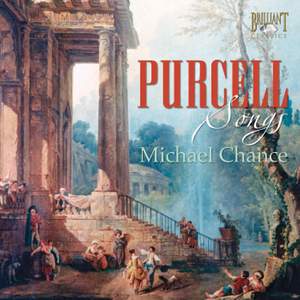
| |  | Purcell - Songs & Instrumental Music
Purcell: | Strike the Viol (from Come Ye Sons of Art, Z323) Incassum Lesbia, incassum rogas ('The Queen's Epicedium'), Z383 Here the deities approve, Z339 O solitude, my sweetest choice, Z406 Sweeter than Roses (from Pausanius, the Betrayer of his Country, Z585) Music for a while, Z583 If music be the food of love, Z379 In the black dismal dungeon of despair, Z190 An Evening Hymn 'Now that the sun hath veiled his light', Z193 Chacony in G minor - for Two Violins, Viola and Bass Z730 Prophetess or The History of Dioclesian, Z627: extracts |
Michael Chance (countertenor), Rebecca Prosser, Ashley Solomon, Rachel Podger, Lucy Russel, Jane Rogers, Richard Boothby, Maggie Cole, Nigel North, Neal Peres Da Costa, David Miller & Daniel Yeadon Florilegium Michael Chance is a renowned exponent of this repertoire. Florilegium has won many awards for its sensitive chamber-music-making in the Barock era. Spanning his short creative life, Purcell’s Songs are a constant feature in his output. In between official Odes, the semi-operas and instrumental music is a profusion of wonderfully intimate, sometimes bawdy and explicit songs. Written for his circle of friends the texts are from a variety of sources – Shakespeare and Dryden understandably loom large among the poets whose words were set by Purcell. In 1698 his songs were published complete in Orpheus Britannicus . Purcell composed only one true opera, and the form known as ‘semi opera’ was the most popular in England at the time. In these works the actors did not sing. Musical interludes either of vocal numbers or instrumental music punctuated the action. The second half of this CD contains examples of the instrumental music Purcell provided for Dioclesan and Timon of Athens. | | | In stock - usually despatched within 1 working day. |
|
|
| |  | Russell Oberlin sings Blow & Purcell
Blow: | Ode on the Death of Mr Henry Purcell | Purcell: | The Spanish Friar or The Double Discovery: Whilst I with grief, Z610 What a sad fate is mine, Z428 Strike the Viol (from Come Ye Sons of Art, Z323) Hark! The Echoing Air (from The Fairy Queen, Z629) Love, thou canst hear, tho' thou art blind, Z396 Ye gentle spirits of the air (from The Fairy Queen, Z629) Let us dance (from Prophetess or The History of Dioclesian, Z627) Sylvia, now your scorn give over, Z420 Ah! how sweet it is to love (from Tyrannic Love or The Royal Martyr, Z613) I love and I must ('Bell Barr'), Z382 Music for a while, Z583 Fly swift ye hours, Z369 Turn then thine eyes, Z425 Sweeter than Roses (from Pausanius, the Betrayer of his Country, Z585) O how happy's he, Z403 Lovely Albina's come ashore, Z394 An Evening Hymn 'Now that the sun hath veiled his light', Z193 |
Rare early recordings, 1953-54 | | | In stock - usually despatched within 1 working day. |
|
|
| |  | Purcell & Blow: Odes & Songs
There is no record of how Purcell's unprecedented youthful genius was received by his contemporaries, though it seems logical that it must have caused considerable wonder in the musical world centred around Westminster. The reality of London musical life was in fact difficult, frenetic, and grossly underfunded, and, along with the whole city, was thrown into confusion with the outbreak of the plague, the war with the Dutch and the catastrophic fire of London. Suffice it to say that a lifelong friendship developed with John Blow, who relinquished his post as organist at Westminster Abbey to the 20-year old Purcell in 1679. Blow's music in the Ode on Purcell's death is probably the most coherent melodious and inventive, outside his beloved Church music. It is also his most Purcellian. The choice of two countertenor voices was fundamental in this respect, and this conscious evocation of the Purcellian sound world is extended in the use of the two recorders, stressing both the funerary and other-worldly associations of the instrument. With this collaboration in memory of Purcell however, he achieves the highest level of expression. Early death, in his time was an unremarkable commonplace, and Dryden and Blow are deploring something rather different, the catastrophe of losing a friend who represented both their own hopes, and the energy and potential of English music in full flood. “Mena and Guillon both sound entirely at ease with Dryden's eloquent English and the musical moods to illustrate literary illusions are captured poignantly...the recorders blend sensitively with the voices and it is a breath of fresh air to hear the simple three-piece continuo team of viol, theorbo and keyboard keeping things simple, tasteful and stylish.” Gramophone Magazine, May 2011 “the performances are lush, sensual without straying into anachronistic mannerisms of gimmickry...Carlos Mena and Damien Guillon, whose voices are wonderfully well matched, are both at their best in intimate chamber music and they clearly relish the by turns weaving and angular lines of Blow anmd Purcell.” International Record Review, March 2011 “The fluency of expression and rich tone of the countertenors Carlos Mena and Damien Guillon combine to bring animation and affection to John Blow’s Ode on the Death of Mr Henry Purcell” The Telegraph, 22nd October 2010 **** | | | Usually despatched in 3 - 4 working days. |
|
|
| |  | Best of Daniel Taylor
Daniel Taylor is one of the most sought-after countertenors in the world today. This album represents a compilation taken from the almost twenty recordings Taylor has made for the ATMA label since 1997, and includes music by Bach, Handel, Purcell, Dowland and Buxtehude, among others. Taylor is heard performing solo, as well as with such singers as Suzie LeBlanc and Jan Kobow, in what promises to be the definitive portrait of this gifted artist. | | | (also available to download from $10.50) | Usually despatched in 2 - 3 working days. (Available now to download.) |
|
|
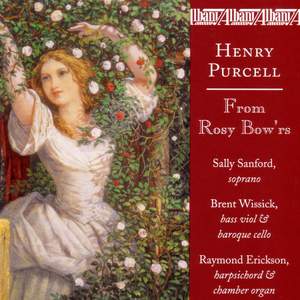
| |  | Purcell: | Now the night is chac'd away (from The Fairy Queen, Z629) If love's a sweet passion (from The Fairy Queen, Z628) Fairest Isle (from King Arthur) Strike the Viol (from Come Ye Sons of Art, Z323) Air (Instrumental From King Arthur) The Fairy Queen, Z. 629: Overture in D major When I am laid in earth (from Dido and Aeneas) An Evening Hymn 'Now that the sun hath veiled his light', Z193 Music for a while, Z583 Chaconne (From King Arthur) Shepherd, leave decoying (from King Arthur, Z628) Third Act Hornpipe (From King Arthur) Prelude (From The Fairy Queen) One charming night (from The Fairy Queen, Z629) First Music (From The Fairy Queen) How blest are the shepherds (from King Arthur) From Rosy Bow'rs (from Don Quixote) Trumpet Tune (From King Arthur) Hark! The Echoing Air (from The Fairy Queen, Z629) |
| | | (also available to download from $10.50) | Usually despatched in 2 - 3 working days. (Available now to download.) |
|
|
| |  | Lost is My Quiet
Two of the most accomplished vocal artists Canada has produced share their love of English song from Purcell's time: solo pieces and duets written for the theatre and for celebratory odes by the Orpheus Britannicus himself, as well as some tasty morsels by his greatest "disciple," John Eccles. John Blow and Henry's younger brother, Daniel, also add more than their two-pence worth. A very worthy band of instrumentalists complete the programme with a choice selection of "ayres" (in truth, instrumental suites) from two theatrical works to which Henry Purcell contributed. | | | (also available to download from $10.50) | Usually despatched in 2 - 3 working days. (Available now to download.) |
|
|
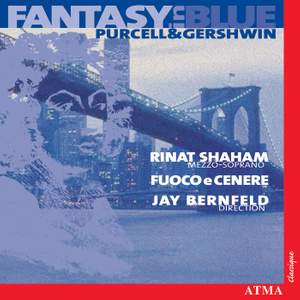
| |  | Fantasy in BluePurcell & Gershwin
Jay Bernfeld (viola da gamba), Rinat Shaham (soprano) Fuoco e cenere | | | (also available to download from $10.50) | Usually despatched in 2 - 3 working days. (Available now to download.) |
|
|
| |  | Purcell Collection
Purcell: | Dido and Aeneas Suites (8) for harpsichord Hail! Bright Cecilia (Ode for St Cecilia's Day 1692), Z328 King Arthur, Z628 Music for the Funeral of Queen Mary, 1695 Te Deum & Jubilate Deo in D, Z232 Prophetess or The History of Dioclesian, Z627 Ten Sonatas in Four Parts (1697) The Fairy Queen, Z629 Twelve Sonatas of three parts (1683) My beloved spake, Z28 O God, thou art my god, Z35 Lord, how long wilt thou be angry?, Z25 Remember not, O Lord, our offences, Z50 Hear my prayer, O Lord, Z15 Strike the Viol (from Come Ye Sons of Art, Z323) Incassum Lesbia, incassum rogas ('The Queen's Epicedium'), Z383 Here the deities approve, Z339 Sweeter than Roses (from Pausanius, the Betrayer of his Country, Z585) Music for a while, Z583 If music be the food of love, Z379 An Evening Hymn 'Now that the sun hath veiled his light', Z193 Lord, what is man?, Z192 O solitude, my sweetest choice, Z406 In the black dismal dungeon of despair, Z190 Lord, I can suffer thy rebukes, Z136 Voluntary in G major, Z720 Lord, I can suffer thy rebukes, Z136 Voluntary in G major, Z720 In guilty night (Saul and the Witch of Endor), Z134 Voluntary in C major, Z717 Plung'd in the confines of despair, Z142 Awake, ye dead, Z182 The earth trembled, Z197 My op’ning eyes are purg’d, ZD72 With sick and famish'd eyes, Z200 Ground in C minor, ZD221 O, I'm sick of life, Z140 Close thine eyes and sleep secure, Z184 |
and chamber and organ music
Known as the ‘English Orpheus’, Henry Purcell, born in London in 1659, began his career as a chorister in the Chapel Royal, an appointment that was to mark the start of his life‐long commitment to the monarchy. Today his music occupies a central position in British culture and is celebrated for its exquisite word‐setting, abundant use of expression and attractive melody; comprising 16 CDs, this compilation pays homage to a composer who, in spite of assimilating the then predominant French and Italian styles, was able to create a uniquely English form of Baroque music. The collection effectively traces the length and breadth of Purcell’s output, from the many sacred works he was required to provide for state occasion and worship (‘Hear My Prayer, O Lord’ and ‘Hail! bright Cecilia’, among others) to secular instrumental and vocal music, written for domestic pleasure as well as the theatre. Semi‐operas, anthems, odes, suites, songs, fantasias: Purcell’s oeuvre was a vast and pioneering one – all the more impressive in view of his untimely death – and the collection presents a selection of his most famous creations (Dido and Aeneas, for example whose first known performance was at a girls’ boarding school in Chelsea) alongside works which are not so widely known. With its veritable Astar list of performers and ensembles, this is the perfect compilation for anyone wishing to explore Purcell’s music in greater depth. Who knows what else Purcell may have achieved, had he lived beyond the tender age of 36: this collection is a testament to his indefatigable genius, one which Britain lacked until the arrival of Elgar two centuries later. | 
| | | Usually despatched in 4 - 5 working days. |
|
|
| |
|