Prices shown exclude VAT. (UK tax is not payable for deliveries to United States.) See Terms & Conditions for p&p rates. | |  | The Flagstad Recitals Volume 2Scandinavian Songs
Alnaes: | De hundrede violiner Varlaengsler Nu brister alle de klofter Februarmorgen ved Golfen | Eggen: | Aere det evige forar i livet | Grieg: | Haugtussa, Op. 67 Hjertets Melodier af H. C.Andersen, Op. 5 No. 3 'Jeg elsker Dig' Eros (from 5 Songs Op. 70) Millom Rosor, Op. 39, No. 4 Der gynger en baad paa bflge, Op. 69, No. 1 Hytten, Op. 18, No. 2 Det første møde, Op. 21 No. 1 Jeg giver mit digt våren, Op. 21, No. 3 Med en Primula veris, Op. 26 No. 4 Med en vandlije, Op. 25 No. 4 Seks Sange, Op. 48 No. 6 'Ein Traum' I Liden hojt deroppe, Op. 39 No. 3 Fra Monte Pincio, Op. 39 No. 1 Liden Kirsten (Little Kirsten), Op. 60 No. 1 Den Aergjerridge, Op. 26, No. 3 Efterårsstormen, Op. 18, No. 4 Og jeg vil ha mig hjertenskjaer (And I would like a sweetheart true), Op. 60 No. 5 Arr. Valdar Jeg giver mit digt våren, Op. 21, No. 3 Arr. Valdar Til én, Op. 59, No. 3 Arr. Valdar Til en II, Op. 59 No. 4 Arr. Valdar | Lie, H: | Nykelen Skindvengbrev | Sibelius: | Illalle, Op. 17 No. 6 (Forsman-Koskimies) Orch. Jalas Var det en dröm? Op. 37 No. 4 (J.J. Wecksell) Orch. Jalas Höstkväll, Op. 38:1 (Text: Viktor Rydberg) Orch. Sibelius Demanten på marssnön, Op. 36 No. 6 (Wecksell) Orch. Sibelius Flickan kom från sin älsklings möte, Op. 37, No. 5 Orch. Pingoud Arioso, Op. 3 (Text: J.L. Runeberg) Orch. Sibelius Våren flyktar hastigt, Op. 13 No. 4 (Text: Runeberg) Orch. Sibelius Se'n har jag ej frågat mera, Op. 17 No. 1 (Text: J.L. Runeberg) Orch. Sibelius Men min fågel märks dock icke, Op. 36, No. 2 Orch. Pingoud På verandan på vid havet, Op. 38 No. 2 (Viktor Runeberg) Orch. Sibelius Den första kyssen, Op. 37 No. 1 (Text: J.L. Runeberg) Orch. Fougstedt Svarta rosor, Op. 36 No. 1 (Ernst Josephson) Orch. Fougstedt Säf, säf, susa, Op. 36 No. 4 (Text: Gustav Fröding) Orch. Hellmann Kom nu hit, Död, Op. 60 No. 1 (Bertel Gripenberg after Shakespeare) Orch. Sibelius |
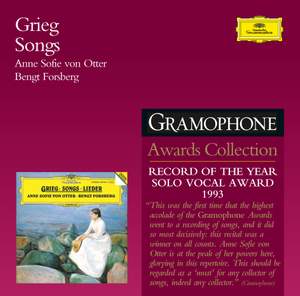
In her autobiography (The Flagstad Manuscript, 1952) Kirsten Flagstad tells of the joy she experienced on finding, when she began to give concerts in the United States, that the Americans so took to the songs of her native country, and particularly of Grieg. She herself had been brought up with them, and even included some in the program of one of her first professional engagements, at an Oslo jail in 1913. She was told that one prisoner due for release had asked to stay on till Easter so that he could hear ‘that girl’ again. The cycle Haugtussa (The Mountain Maid, 1895) was almost entirely unknown to listeners outside Scandinavia till Flagstad issued her first recording of it in 1940. Even then it failed to achieve the popularity its melodies and poignancy should have eared for it, and only since the 150th anniversary of the composer’s birth has it won due recognition. Yet Flagstad had a great love for it and put heart and soul into the songs. This second volume of “The Flagstad Recitals” focuses on Grieg as well as other Scandinavian composers, offering songs with both piano as well as orchestral accompaniment. [Grieg Songs] “Listening to Mme Flagstad's recital makes one regret that she did not record more of her great countryman. The songs are varied and rewarding and her account of From Monte Pincio, one of the finest, is beautifully characterised as indeed are nearly all the songs on this record. I only regret that the quality of the recording was not better. The voice remains undimmed…" Gramophone "…what a marvellously fresh and original work Haugtussa is and how glorious is Flagstad's tone and characterisation! I do urge readers who do not know this song-cycle to invest in this record." Gramophone | | | In stock - usually despatched within 1 working day. |
|
|
| |  | Jussi Björling in Concert in Finland and USA 1940-1957
Bartlett, J C: | A Dream | Bizet: | La fleur que tu m'avais jetée (from Carmen) | Denza: | Funiculì-Funiculà | Geehl: | For You Alone | Giordano, U: | Amor ti vieta (from Fedora) Come un bel dì di maggio (from Andrea Chénier) | Gounod: | De grâce demeurez… Ange adorable (Roméo et Juliette) | Grieg: | En svane (No. 2 from Seks Digte af Henrik Ibsen, Op. 25) Seks Sange, Op. 48 No. 6 'Ein Traum' Seks Sange, Op. 48 No. 6 'Ein Traum' | Handel: | Frondi tenere e belle ... Ombra mai fù (from Serse) | Hardelot: | Because | Mascagni: | Mamma, quel vino (from Cavalleria Rusticana) | Morgan, O: | Clorinda | Nordqvist: | Till havs (Towards the Sea) | Puccini: | Che gelida manina (from La Bohème) E lucevan le stelle (from Tosca) | Rachmaninov: | Lilacs, Op. 21 No. 5 V molchanii nochi taynoy, Op. 4 No. 3 | Rimsky Korsakov: | Song of the Hindu Guest (from Sadko) | Rossini: | Soirées musicales: La Danza | Schubert: | Frühlingsglaube, D686 Die Forelle, D550 Ständchen 'Leise flehen meine Lieder', D957 No. 4 | Sibelius: | Flickan kom från sin älsklings möte, Op. 37, No. 5 Säf, säf, susa, Op. 36 No. 4 (Text: Gustav Fröding) Var det en dröm? Op. 37 No. 4 (J.J. Wecksell) Demanten på marssnön, Op. 36 No. 6 (Wecksell) Demanten på marssnön, Op. 36 No. 6 (Wecksell) Svarta rosor, Op. 36 No. 1 (Ernst Josephson) | Sjöberg: | Tonerna (text: Erik Gustaf Geijer) Tonerna (text: Erik Gustaf Geijer) | Strauss, R: | Traum durch die Dämmerung, Op. 29 No. 1 Zueignung, Op. 10 No. 1 | Tosti: | L'alba separa dalla luce l'ombra Ideale | Verdi: | La donna è mobile (from Rigoletto) Giovanna, ho dei rimorsi (from Rigoletto) È il sol dell'anima (from Rigoletto) | Wagner: | In fernem Land (from Lohengrin) |
“More inveterate collectors will want this latest issue - which also is
reported to be the last issue from Bluebell, who have done a sterling job
over the years to put on disc innumerable previously unavailable Jussi
titles. The team behind this set and all the previous issues of Jussi
Björling recordings have done sterling service to his memory and their
best reward would be that even more people would invest in all the riches
that this and the previous issues contain. A cultural achievement of the
utmost importance”.” MusicWeb International | 
| | | Usually despatched in 4 - 5 working days. |
|
|
| |  | The Art of Nance Grant
Beethoven: | Komm, Hoffnung, lass den letzten Stern (from Fidelio) | Donizetti: | Si, vuol di Francia il Rege...Ah! Quando all'ara scorgemi...Ah! Dal ciel discenda un raggio (from Maria Stuarda) | Grieg: | Ich liebe Dich, Op. 5 No. 3 Med en vandlije, Op. 25 No. 4 Two Brown Eyes from “Melodies Of The Heart, Op. 5, No. 4 Peer Gynt: Solveig's Song Seks Sange, Op. 48 No. 6 'Ein Traum' | Hageman: | Charity Music I Heard With You At the Well Do Not Go, My Love Miranda | Mendelssohn: | Hear ye, Israel | Mozart: | Estinto è Idomeneo?...Tutte nel cor vi sento (from Idomeneo) Chi mai del mio provo - Idol mio se ritroso (from Idomeneo) | Strauss, R: | Ich Schwebe, Op. 48 No. 2 Meinem Kinde, Op. 37 No. 3 Die Nacht, Op. 10 No. 3 Die Georgine Op. 10 No. 4 Glückes genug Op. 37 No. 1 Wie sollten wir geheim sie halten, Op. 19 No. 4 Schön sind, doch kalt die Himmelssterne, Op. 19, No. 3 Waldseligkeit, Op. 49 No. 1 Wiegenlied, Op. 41 No. 1 Ein schones war (from Ariadne auf Naxos) Es gibt ein Reich (from Ariadne auf Naxos) | Wagner: | Dich, teure Halle (from Tannhauser) Der Männer Sippe (from Die Walküre) Du bist der Lenz (from Die Walküre) Wesendonck-Lieder (5) |
Acclaimed and cherished as one of Australia’s finest operatic artists, Nance Grant had a voice possessed with beauty and power, an ease of technique, a perfection of phrasing and taste that cemented her place in the hearts of Australian music lovers. This long overdue tribute presents one of the great sopranos from down under - in recordings previously thought lost. Nance Grant chose to stay close to her family in Australia rather than pursue an international career, even though Sir Edward Downes insisted he could ‘fill her books’ with performances in Britain and Europe. So this double album offers those who never had the opportunity to hear her, the gift of discovering a voice of magnitude and generosity, and for those who grew up hearing her on stage, the chance to reacquaint themselves with her artistry. The original tapes from radio broadcasts of the 1960s and ’70s have been carefully restored to give more than a hint of the majesty of Nance Grant in a characteristic range of repertoire. The recordings represent significant landmarks in the development of opera in Australia: the emerging Victorian State Opera’s enormously successful Idomeneo, re di Creta, and Maria Stuarda under the direction of Richard Divall; Australian Opera’s Ariadne auf Naxos, Fidelio and Tannhäuser with Sir Edward Downes; and one of the first of the Australian Opera/ABC collaborations presenting concert performances of Wagner operas, with Grant as Sieglinde in Die Walküre conducted by Leif Segerstam. The programme also pays homage to Nance’s considerable concert career, including a complete song recital - Greig, Richard Hageman and Richard Strauss - with pianist Geoffrey Parsons, Wagner’s Wesendonck Lieder with the West Australian Symphony Orchestra, and an excerpt from Mendelssohn’s Elijah. | | | Usually despatched in 4 - 5 working days. |
|
|
| |  | Nordische Lieder
Gade, N: | Songs (5), Op. 24 | Grieg: | Wo sind sie hin?, Op. 4 No. 6 Ich stand in dunkeln Traumen, Op. 2 No. 3 Du fatter ei Bolgernes evige Gang, Op. 5 No. 2 Seks Sange, Op. 48 No. 1 'Gruss' Seks Sange, Op. 48 No. 6 'Ein Traum' | Kilpinen: | Lieder um den Tod, Op. 62 (Texts: Christian Morgenstern) | Sibelius: | Drömmen, Op. 13, No. 5 Fåfäng önskan, Op. 61, No. 7 Necken (The Watersprite, or The Elf-King) Op. 57 No. 8 (Josephson) Till Frigga, Op. 13, No. 6 | Stenhammar: | Fem sånger av Bo Bergman, Op. 20 (Five Songs, Op. 20) (Texts: Bo Bergman) |
Dominik Worner (bass-baritone), Simon Bucher (piano) | | | (also available to download from $10.50) | Usually despatched in 4 - 5 working days. (Available now to download.) |
|
|
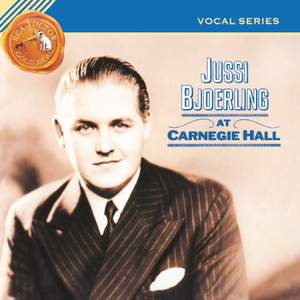
| |  | Björling sings at Carnegie Hall
Beethoven: | Adelaide, Op. 46 | Bizet: | La fleur que tu m'avais jetée (from Carmen) | Brahms: | Ständchen, Op. 106 No. 1 | Foster, S: | I Dream of Jeanie with the Light Brown Hair | Giordano, U: | Amor ti vieta (from Fedora) Come un bel dì di maggio (from Andrea Chénier) | Grieg: | En svane (No. 2 from Seks Digte af Henrik Ibsen, Op. 25) Seks Sange, Op. 48 No. 6 'Ein Traum' | Mascagni: | Mamma, quel vino (from Cavalleria Rusticana) | Massenet: | Instant charmant … En fermant les yeux (from Manon) | Mozart: | Il mio tesoro intanto (from Don Giovanni) | Puccini: | E lucevan le stelle (from Tosca) Che gelida manina (from La Bohème) | Schubert: | Frühlingsglaube, D686 Die Forelle, D550 Ständchen 'Leise flehen meine Lieder', D957 No. 4 Die böse Farbe (No. 17 from Die schöne Müllerin, D795) | Sibelius: | Demanten på marssnön, Op. 36 No. 6 (Wecksell) Säf, säf, susa, Op. 36 No. 4 (Text: Gustav Fröding) Svarta rosor, Op. 36 No. 1 (Ernst Josephson) | Sjöberg: | Tonerna (text: Erik Gustaf Geijer) | Strauss, R: | Traum durch die Dämmerung, Op. 29 No. 1 Cäcilie, Op. 27 No. 2 | Tosti: | Ideale L'alba separa dalla luce l'ombra |
Sony Classical ORIGINALS offer listeners outstanding enjoyment, authentically recapturing the fascination of legendary recordings from the age of long-playing records and preserving worthwhile releases from two labels with particularly long and distinguished traditions: RCA Red Seal and Columbia Masterworks. These superb recordings by great artists have enjoyed international acclaim ever since they were first released. Showered with critical plaudits, they are part of the 20th century’s cultural legacy. All have been remastered and carefully restored using the latest studio technology in order to reproduce the original interpretations as faithfully as possible. The CD covers are taken over from the original LPs. The original introductions and LP labels are also reproduced in full, making Sony Classical ORIGINALS unique documents in the history of recorded sound. Featuring original LP cover artwork in full size and reproduction of original labels in mini LP design. Contains original liner notes in 3 languages (English, French and German) Jewel case packaging with fully coloured booklets. The Sony Classical Originals bring together for the first time at the Mid Price the greatest recordings from across all of the labels which are part of the Sony Classical umbrella, and are a perfect starting point for any classical collector. | | | Usually despatched in 3 - 4 working days. |
|
|
| |  | Till Solveig...
Debussy: | Trois chansons de Bilitis Apparition - song (1884) Beau Soir | Grieg: | Zur Rosenzeit (No. 5 from Seks Sange, Op. 48) Jeg Elsker Deg, Op. 41 No. 3 Seks Sange, Op. 48 No. 6 'Ein Traum' En svane (No. 2 from Seks Digte af Henrik Ibsen, Op. 25) Hjertets Melodier af H. C.Andersen, Op. 5 No. 1 'To brune Øjne' Peer Gynt: Solveig's Song Haugtussa, Op. 67 No. 6 'Killingdans' Med en vandlije, Op. 25 No. 4 | Rangström: | Pan | Sibelius: | Se'n har jag ej frågat mera, Op. 17 No. 1 (Text: J.L. Runeberg) Marssnön (Wecksell) Men min fågel märks dock icke, Op. 36, No. 2 Svarta rosor, Op. 36 No. 1 (Ernst Josephson) En slända, Op. 17, No. 5 Flickan kom från sin älsklings möte, Op. 37, No. 5 |
Karen Vourc'h (soprano) & Susan Manoff (piano) “In the works by Grieg, we wanted there to be unity in the language. So To brune ojne and Jeg elsker dig, by the Danish poet Andersen, are sung in Norwegian. The songs of Op. 48, settings of various German poems, were translated by the poet Nordahl Rolfsen, who was a close friend of Grieg’s. And I have chosen to sing his translations of the two German poems, by Goethe and von Bodenstedt: En drøm (Ein Traum) and I rosentiden (Zur Rosenzeit). They are usually sung in German. In Grieg there is no tragedy, but instead a gentle Nordic melancholy. In Sibelius, on the other hand, nature is brutal and love is passionate. Never has the personification of nature been as present as it is in these songs. Here, everything evokes the end of winter and the gushing waters of spring (Marssno, Men min fagel), betrayal (Se n har jag, Flickan kom ifran), despair and weariness with life, conveyed by the image of a rose tree growing in the heart (Svarta rosor); I thought it was interesting to include the song En slanda, in which the music, rather than the poem itself, evokes a dragonfly, symbolising the pleasures of life which come to distract the mind of a person who is lost in thought. The idea of completing this recording with Debussy’s very sensual evocations of amorous desire expressed in the three Chansons de Bilitis came quite naturally. Apparition is for me one of Mallarmé’s finest poems, and in his setting Debussy conveys perfectly the ecstatic yet unsettling feelings caused by love at first sight. We chose to end this recording with Beau Soir. This infinitely gentle song invites us to contemplate nature and the natural cycle of water and of human life.” Karen Vourc’h Karen Vourc’h studies with Christa Ludwig. In 2010, she will be Annina in Menotti's Saint of Bleeker Street at the Opéra de Marseille, Musetta at the Opéra de Monaco, Mélisande at the Opéra Comique, conducted by Sir John Eliot Gardiner, and Vincenette (Mireille) at the Chorégies d' Orange. In March she shared the rôle of Emilie in Kaia Saariaho’s new opera, with Karita Mattila, to good reviews. | | | Usually despatched in 3 - 4 working days. |
|
|
| |  | Grieg: Summer NightLieder arranged for Saxophone and Piano
Grieg: | Seks Sange, Op. 48 No. 6 'Ein Traum' Med en Primula veris, Op. 26 No. 4 Margrethes vuggesang (Margaret’s Cradle Song) Med en vandlije, Op. 25 No. 4 Efterårsstormen, Op. 18, No. 4 Fyremal (No. 12 from 12 Melodies, Op. 33) Moonlit Forest (No. 1 from Romances and Songs, Op. 18) Udfarten, Op. 9 No. 4 Et vennestykke, Op. 33 No. 10 Tak for dit råd (from 4 Songs Op. 21) Der skreg en fugl (A Bird Cried out), Op. 60 No. 4 |
Harry-Kinross White (saxophone), Edward Rushton (piano) Grieg himself was his first transcriber - he was used to arrange lots of his orchestral works for piano and vice versa, a tradition starting with Mendelssohns "Lieder ohne Worte" and lasting until today. Harry-Kinross White was for many years member of the Raschèr saxophone quartet. | | | (also available to download from $10.50) | Usually despatched in 4 - 5 working days. (Available now to download.) |
|
|
| |  | Jussi Bjorling: Live Atlanta Recital, 13th April 1959
Alfvén: | Skogen sover, Op. 28 No. 6 | Bizet: | La fleur que tu m'avais jetée (from Carmen) | Giordano, U: | Amor ti vieta (from Fedora) | Gounod: | Nuit d'hyménée from Roméo et Juliette Bonus track Orchestre de l'Opéra de San Francisco, Gaetano Merola | Grieg: | En svane (No. 2 from Seks Digte af Henrik Ibsen, Op. 25) Seks Sange, Op. 48 No. 6 'Ein Traum' | Handel: | Frondi tenere e belle ... Ombra mai fù (from Serse) | Massenet: | Je suis seul, seul enfin... Ah fuyez douce image (from Manon) Bonus track Orchestre de l'Opéra de San Francisco, Gaetano Merola | Peterson-Berger: | Jungfrun under lind (Ernst von der Recke) | Puccini: | Che gelida manina (from La Bohème) Nessun dorma (from Turandot) O soave fanciulla (from La Bohème) Bonus track Orchestre de l'Opéra de San Francisco, Gaetano Merola | Rachmaninov: | Lilacs, Op. 21 No. 5 V molchanii nochi taynoy, Op. 4 No. 3 | Schubert: | Frühlingsglaube, D686 Die Forelle, D550 Ständchen 'Leise flehen meine Lieder', D957 No. 4 | Sjöberg: | Tonerna (text: Erik Gustaf Geijer) | Sjögren: | I drömmen du är mig nära | Strauss, R: | Traum durch die Dämmerung, Op. 29 No. 1 Zueignung, Op. 10 No. 1 | Verdi: | Ingemisco (from Requiem) Bonus track AVRO Hilversum Orchestra, Frieder Weissmann |
The famous Jussi Björling Recital given in Atlanta, 13th April 1959 | | | Usually despatched in 2 - 3 working days. |
|
|
| |  | Jussi Björling - In Song
Arthur: | Today | Bizet: | Je crois entendre encore (from Les Pêcheurs de Perles) | Brahms: | Die Mainacht, Op. 43 No. 2 | Curtis, E: | Torna a Surriento | Geehl: | For You Alone | Grieg: | En svane (No. 2 from Seks Digte af Henrik Ibsen, Op. 25) Seks Sange, Op. 48 No. 6 'Ein Traum' | Kalman: | Das Veilchen vom Montmartre | Körling: | Vita rosor | Leoncavallo: | Mattinata - 'L'aurora di bianco vestita' | Liszt: | Es muss ein Wunderbares sein, S. 314 | Rachmaninov: | Lilacs, Op. 21 No. 5 | Schubert: | Die Forelle, D550 Die Allmacht, D852 Ständchen 'Leise flehen meine Lieder', D957 No. 4 Wandrers Nachtlied II 'Über allen Gipfeln ist Ruh', D768 Die böse Farbe (No. 17 from Die schöne Müllerin, D795) | Sibelius: | Svarta rosor, Op. 36 No. 1 (Ernst Josephson) | Sjögren: | I drömmen du är mig nära | Strauss, R: | Ständchen, Op. 17 No. 2 Morgen, Op. 27 No. 4 | Tosti: | Ideale | trad.: | Ack Värmeland du sköna (Ah Värmland, Thou Fairest) arr. Randel Allt Under Himmelens Fäste | Wolf, H: | Verborgenheit (No. 12 from Mörike-Lieder) |
Historic Masters Ltd. Is delighted to be associated with, and to have contributed to, this CD release of little known material by one of the truly great tenors of the twentieth century. In the course of our researches we have discovered original metal parts for three recordings by Jussi Björling which were not released by EMI at the time they were made. All three have now been issued as part of our Historic Masters series and we are delighted to be able to make copies available for transfer to this CD. The tenor solo from Bizet’s Les Pêcheurs de perles was recorded in April 1947. Given that it is Björling’s only studio version of this aria, it seems surprising that it remained unissued until November 1977, late in the LP era. Only then was it included in an EMI boxed set entitled The Art of Jussi Björling. The other two items, the songs Mattinata and For you alone, rank amongst our most sensational discoveries in the EMI archive. These were the very first recordings made by Björling as an adult on 4 September 1929. Piano accompanied, they were almost certainly intended as tests to determine Björling’s suitability for a recording contract. Listening to these first recordings, there can be no surprise that Björling clearly passed this examination with flying colours. Three months later he was in the studio for what was in effect the launching of his hugely successful recording career with HMV and Victor. In the first few months of that career Björling repeated both songs – this time with full orchestral accompaniment. Perhaps this explains why the original tests were forgotten and, indeed, were marked in March 1930 as ‘destroyed’. In 1952, RCA, using the recently developed tape technology, decided to record a selection of the songs that Björling performed at his recitals. It is unlikely that all of these pieces would have been given at one time, but they were certainly included in his programmes over the years and give a very representative selection of the range of his repertoire. Apart from German Lieder, he always liked to sing some Swedish pieces, as well as works by the Finnish composer Sibelius, who complimented him on his interpretations of his songs, particularly those written to Swedish words. This recording from 1952 remained on the catalogue for many years as an LP in the USA, but it was less widely available in Europe and can now be heard here for the first time in a CD transfer from the original master tape. It finds Björling in particularly glorious voice. Extract from the booklet | | | Usually despatched in 4 - 5 working days. |
|
|
| |  | The Gigli Edition 15The 1955 Carnegie Hall Farewell Recitals
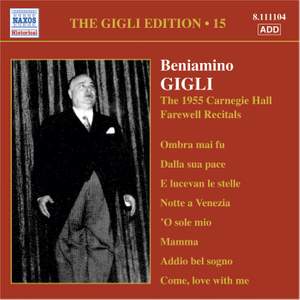
By and large Gigli kept faith with those pieces he most enjoyed singing and that his public adored. ‘It was only through my audiences that this exercise of lungs, diaphragm and vocal cords became transmuted for me into a profound spiritual experience. Like a squirrel counting his hoard of nuts in the winter, I treasure their applause in my memory.’ | | | (also available to download from $8.75) | Usually despatched in 2 - 3 working days. (Available now to download.) |
|
|
| |
|