Prices shown exclude VAT. (UK tax is not payable for deliveries to United States.) See Terms & Conditions for p&p rates. | |  | Mendelssohn - Orchestral Works
The Decca Ansermet Legacy on Eloquence continues to garner the highest plaudits from publications all around the world and the latest batch presents the maestro’s recordings of four key Austro-German Romantics: Schubert, Weber, Mendelssohn and Schumann. This 2-CD set brings together all of Ansermet’s Mendelssohn and Schubert recordings for Decca. Adopting clarity and muscularity over homogeneity, Ansermet’s Mendelssohn has dalliance and grace, not to mention wit. The Schubert Rosamunde music is notable particularly for its gorgeously cradled B-flat Entr’acte as well as the Ballet Music No. 1, previously unpublished, possibly due to the limiting length of the LP side – the original LP coupling the Mendelssohn Midsummer Night’s Dream excerpts with Schubert’s Rosamunde. [Mendelssohn Symphony and Overtures] “…fresh, lovely and perceptive Mendelssohn playing, beautifully recorded” Gramophone [Midsummer Night's Dream & Rosamunde] “…enjoyable and musicianly performances…” Gramophone | | | In stock - usually despatched within 1 working day. |
|
|
| |  | Schubert: Incidental music to Rosamunde, D797
“a fresh vital performance... the sound is bright, clear and full... Irresistible” Classics Today “Munchinger's performance of the delightful Rosamunde music glows with an affectionate warmth and understanding which places this as one of his very best records...the VPO is at its magnificent best” Penguin Guide, 2011 edition | | | In stock - usually despatched within 1 working day. |
|
|
| |  | Mendelssohn: A Midsummer Night's Dream
| | | (Sorry, download not available in your country) | Usually despatched in 2 - 3 working days. |
|
|
| |  | Schubert: Incidental music to Rosamunde, D797
Serena Malfi (alto) Schweizer Kammerchor & Musikkollegium Winterthur, Douglas Boyd The premiere of the drama Rosamunde took place in Vienna in 1823. It was a complete disaster and was taken off next day. Happily, the music has survived and is interpreted here anew by Serena Malfi, the Swiss Chamber Choir and the Musikkollegium Winterthur under Douglas Boyd, in a spirited recording. “Boyd gets crisp and responsive playing from his Winterthur orchestra, founded on lean-toned strings, wth violins properly divided left and right...[Rhythms] are supple and buoyant, while first flute, oboe and especially clarinet frolic gracefully in their many bucolic solos. The fresh-toned Swiss Chamber Choir are at least a match for their rivals; and Serena Malfi brings a flavoursome, Latin timbre, if no special feeling for the words, to the wistful Romance.” Gramophone Magazine, October 2011 “Boyd conveys the dramatic impetus of the 'First Entr'acte' without equivocation...Yet it is the 'Second Entr'acte' that emerges the most persuasively here...As to the vocal items, the Schweizer Kammerchor brings appropriate gravity to the Weber-like 'Spirits' Chorus' and a ready brio to the 'Huntsmen's Chorus', while the 'Shepherds' Chorus' is dispatched with a properly infectious swing.” International Record Review, May 2011 | | | Usually despatched in 2 - 3 working days. |
|
|
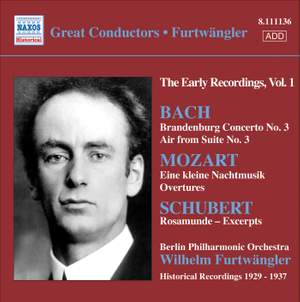
| |  | Furtwängler - The Early Recordings Volume 1
Bach, J S: | Brandenburg Concerto No. 3 in G Major, BWV1048 Recorded in 1930 Orchestral Suite No. 3 in D major, BWV1068: Air ('Air on a G String') Recorded 13th June, 1929 | Mozart: | Le nozze di Figaro, K492: Overture Recorded November, 1933 Serenade No. 13 in G major, K525 'Eine kleine Nachtmusik': Allegro Recorded 28th December, 1936 and June, 1937 Die Zauberflöte, K620: Overture Recorded 1930 | Schubert: | Incidental music to Rosamunde, D797 Recorded 13th June, 1929 Rosamunde, D797: Ballet Music No. 2 Recorded 13th June, 1929 |
Volume 1 of this new Naxos edition of Wilhelm Furtwängler’s pre-1940s recordings includes an account of J.S. Bach’s third Brandenburg Concerto that is lightyears away from the ‘historically informed’ norm of today, yet eloquent, deeply-felt and with a real sense of light and shade. The two Mozart opera overtures are typically dramatic and intense, while in the ever-popular Eine kleine Nachtmusik Furtwängler caresses the melodies, allowing rhythms to stand proud and making effective use of dynamic contrasts. The Overture to Schubert’s Rosamunde is especially weighty in Furtwängler’s hands, while the B flat Entr’acte is tender and warmly expressed, and the G major Ballet Music puckish and witty. “Furtwängler's Bach may occasion some strokes, but his Mozart and Schubert, recorded in 1929-37, sing and dance with irresistible élan, and the playing of the Berlin Philharmonic is gorgeous.” BBC Music Magazine, Proms 2008 ***** “Furtwängler plays with a fine mixture of virility and grace….A particular delight [and] thoroughly enjoyable reissue.” Classic FM Magazine “…a fine performance, utterly characteristic in its power and malleability, and essential listening for anyone interested in this supremely great conductor.” Gramophone Magazine | | | (also available to download from $8.75) | Usually despatched in 2 - 3 working days. (Available now to download.) |
|
|
| |  |
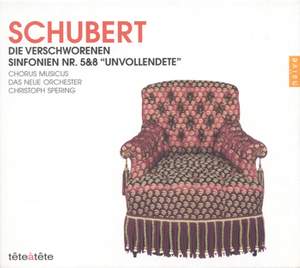
Lisa Larsson, Susanne Behnes, Thomas Pfutzner, Anke Hoffmann, Christian Dahm, Peter Lika, Andreas Fischer, Marion Steingotter, Soile Isokoski, Mechthild Georg, Rodrigo Orrego Neue Orchestra, Christoph Spering | | | (also available to download from $20.75) | Usually despatched in 3 - 4 working days. (Available now to download.) |
|
|
| |  | Wilhelm Furtwängler: The Legend
This 3-CD set couples together a selection of some of the more popular classics recorded by the great German conductor Wilhelm Furtwängler. Furtwängler was born 125 years ago in 1886 and this birthday tribute comes as a timely reminder of his genius. He was, without doubt, one of the truly great musical interpreters of the 20th century and we are fortunate indeed that he was working at a time when EMI were able to capture on record his work both in the studio and on the concert platform. All the recordings were made with the Vienna Philharmonic in the late 1940s and early '50s, during the final years of the conductor's career. The first disc in the set contains three popular symphonies by composers who were close to Furtwängler's heart. The other two CDs comprise a selection of well-known shorter works, making this the ideal means by which purchasers can familiarise themselves with the work of this great man of music. Studio Recordings, 1949-1954 | | | In stock - usually despatched within 1 working day. |
|
|
| |  | Rudolf Kempe: The Genius of the Podium
Beethoven: | Symphony No. 1 in C major, Op. 21 Symphony No. 3 in E flat major, Op. 55 'Eroica' Symphony No. 5 in C minor, Op. 67 Symphony No. 6 in F major, Op. 68 'Pastoral' | Brahms: | Symphony No. 3 in F major, Op. 90 Symphony No. 4 in E minor, Op. 98 | Dvorak: | Symphony No. 9 in E minor, Op. 95 'From the New World' Scherzo capriccioso, Op. 66 | Humperdinck: | Hänsel & Gretel Overture Hänsel & Gretel: Witch's Ride Hansel und Gretel: Traumszene | Mascagni: | L'Amico Fritz: Intermezzo | Mendelssohn: | A Midsummer Night's Dream - incidental music, Op. 61 | Offenbach: | Orphée aux Enfers Overture | Ponchielli: | La Gioconda (excerpts) | Rimsky Korsakov: | Scheherazade, Op. 35 | Schubert: | Incidental music to Rosamunde, D797 | Smetana: | The Bartered Bride Overture The Bartered Bride: Three Dances (Polka, Furiant, Skocná - Dance of the Comedians) | Strauss, J, II: | Die Fledermaus Overture | Strauss, R: | Don Quixote, Op. 35 Tod und Verklärung, Op. 24 Salome: Dance of the Seven Veils Till Eulenspiegels lustige Streiche, Op. 28 Ein Heldenleben, Op. 40 Kindskopf! Merkt auf, wir spielen mit in dem Stück (from Ariadne auf Naxos) Sylvia Geszty (Zerbinetta), Teresa Zylis-Gara (Komponist) An ihre Plätze, meine Damen und Herrn! (from Ariadne auf Naxos) Theo Adam (Musiklehr) | Wagner: | Lohengrin: Preludes to Acts 1 & 3 Bridal Chorus 'Treulich geführt' (from Lohengrin) In fernem Land (from Lohengrin) Jess Thomas (Lohengrin) Selig, wie die Sonne (from Die Meistersinger von Nürnberg) Gerhard Unger (David), Elisabeth Grummer (Eva), Marga Hoffgen (Magdalene), Rudolf Schock (Walther), Ferdinand Frantz (Sachs) Morgenlich leuchtend im rosigen Schein 'Prize Song' (from Die Meistersinger von Nürnberg) Rudolf Schock (Walther) Verachtet mir die Meister nicht (from Die Meistersinger von Nürnberg) Ferdinand Frantz (Sachs) Parsifal: Prelude to Act 1 Parsifal: Good Friday Music Sankt Krispin, lobet ihn! (from Die Meistersinger von Nürnberg) Heil! König Heinrich (from Lohengrin) Morgenröte (from Lohengrin) Was bringen die? Was tun sie kund? (from Lohengrin) lhr tanzt? Was werden die Meister sagen? (from Die Meistersinger von Nürnberg) Gerhard Unger (David) | Weinberger: | Schwanda the Bagpiper: Polka |
The German conductor Rudolf Kempe (1910–1976) began his musical career playing the oboe in various symphony orchestras. He eventually graduated to being a conductor after working for several years as an operatic repetiteur. His modest manner on the podium belied his great authority in controlling an orchestra, and his warm but meticulously detailed interpretations of the main classical repertoire established him as one of the leading conductors of his time. The programme begins with recordings of four Beethoven Symphonies that Kempe made with the Munich Philharmonic Orchestra in 1971–72 as part of a complete cycle that has been critically acclaimed, although it has not previously been widely available. These are followed by Symphonies 3 and 4 by Brahms with the Berlin Philharmonic Orchestra and the Royal Philharmonic Orchestra respectively, two orchestras with which Kemper was closely associated throughout his career. The next CD shows Kempe’s skill with descriptive ‘programme’ music in Mendelssohn’s delightful incidental music to Shakespeare’s ‘A Midsummer Night’s Dream’ and Rimsky-Korsakov’s colourful orchestral suite Scheherazade depicting a number of tales from the 1001 Arabian Nights. Then comes music by three Bohemian composers: the opening of the famous ‘Largo’ from Dvorák’s ‘New World’ Symphony; the Polka from Schwanda the Bagpiper by Weinberger; and a suite from Smetana’s lively opera The Bartered Bride. CDs 6 and 7 present several of the main orchestral works by Richard Strauss, including Don Juan., Ein Heldenleben, Till Eulenspiegel, Tod und Verklärung and Don Quixote, all except the last recorded with the Staatskapelle Dresden, an orchestra closely associated with the works of Richard Strauss. CD 8 moves to the opera house and includes vocal extracts from Richard Strauss’s Ariadne auf Naxos and Wagner’s Lohengrin and Die Meistersinger von Nürnberg. The next CD covers orchestral pieces from opera, including a suite arranged by Kempe himself from Hansel und Gretel by Humperdinck On CD 10 we find Kempe in lighter mood with the Vienna Philharmonic Orchestra in a programme of orchestral bon-bons that was called Vienna Philharmonic ‘On Holiday’ when it was originally released on LP. Tthe final CD covers some of the best loved music by the Strauss family. The very last track in the album is the waltz Gold und Silber by Franz Lehár, which Kempe considered the finest studio recording he ever made. | | | In stock - usually despatched within 1 working day. |
|
|
| |  | Bruno Walter: The Edition
Barber, S: | Symphony No. 1, Op. 9 New York Philharmonic | Beethoven: | Symphonies Nos. 1-9 (complete) Columbia Symphony Orchestra & Westminster Choir Coriolan Overture, Op. 62 Columbia Symphony Orchestra Piano Concerto No. 5 in E flat major, Op. 73 'Emperor' Serkin New York Philharmonic Violin Concerto in D major, Op. 61 Szigeti New York Philharmonic Triple Concerto for Piano, Violin, and Cello in C major, Op. 56 Hendl, McClure, Rose New York Philharmonic Egmont Overture, Op. 84 | Brahms: | Symphonies Nos. 1-4 (Complete) Walter rehearses Beethoven - Columbia Symphony Orchestra Double Concerto for Violin & Cello in A minor, Op. 102 Francescatti, Fournier Columbia Symphony Orchestra Variations on a theme by Haydn for orchestra, Op. 56a 'St Anthony Variations' Columbia Symphony Orchestra Tragic Overture, Op. 81 Columbia Symphony Orchestra Schicksalslied, Op. 54 Occidental College Concert Choir, Columbia Symphony Orchestra Ein Deutsches Requiem, Op. 45 Occidental College Concert Choir, Columbia Symphony | Bruckner: | Symphony No. 4 in Eb Major 'Romantic' Columbia Symphony Orchestra Symphony No. 7 in E Major Columbia Symphony Orchestra Symphony No. 9 in D Minor Columbia Symphony Orchestra Te Deum in C major, WAB 45 Westminster Choir, New York Philharmonic | Dvorak: | Slavonic Dance No. 1 in C Major, Op. 46 No. 1 New York Philharmonic | Haydn: | Symphony No. 88 in G major Symphony No. 100 in G major 'Military' Symphony No. 102 in B flat major Symphony No. 96 in D major 'Miracle' | Mahler: | Symphony No. 1 in D major 'Titan' Columbia Symphony Orchestra Symphony No. 4 in G major Halban Columbia Symphony Orchestra Symphony No. 2 in C minor 'Resurrection' Columbia Symphony Orchestra Symphony No. 5 in C sharp minor New York Philharmonic Symphony No. 9 in D major Columbia Symphony Orchestra Das Lied von der Erde Miller, Haefliger New York Philharmonic | Mendelssohn: | Violin Concerto in E minor, Op. 64 Milstein New York Philharmonic | Mozart: | Symphony No. 25 in G minor, K183 Symphony No. 28 in C major, K200 Symphony No. 29 in A major, K201 Symphony No. 35 in D major, K385 'Haffner' Symphony No. 36 in C major, K425 'Linz' rehearsal & performance Symphony No. 38 in D major, K504 'Prague' Symphony No. 39 in E flat major, K543 New York Philharmonic Symphony No. 40 in G minor, K550 New York Philharmonic Symphony No. 41 in C major, K551 'Jupiter' New York Philharmonic Violin Concerto No. 3 in G major, K216 Columbia Symphony Orchestra Violin Concerto No. 4 in D major, K218 Columbia Symphony Orchestra Serenade No. 13 in G major, K525 'Eine kleine Nachtmusik' Columbia Symphony Orchestra Requiem in D minor, K626 Westminster Choir, New York Philharmonic | Schubert: | Symphony No. 5 in B flat major, D485 Columbia Symphony Orchestra Symphony No. 8 in B minor, D759 'Unfinished' Columbia Symphony Orchestra Symphony No. 9 in C major, D944 'The Great' Columbia Symphony Orchestra Incidental music to Rosamunde, D797 Columbia Symphony Orchestra | Schumann: | Piano Concerto in A minor, Op. 54 Istomin Columbia Symphony Orchestra Symphony No. 3 in E flat major, Op. 97 'Rhenish' | Strauss, R: | Don Juan, Op. 20 New York Philharmonic Tod und Verklärung, Op. 24 New York Philharmonic |
Walter rehearses Beethoven - Columbia Symphony Orchestra Mozart: Minuet and Trio Nos. 1 & 5, German Dances, Overtures Strauss Jr.: Waltzes / Brahms: Hungarian Dances - Columbia Symphony Orchestra, New York Philharmonic Walter rehearses the Siegfried-Idyll, Preludes and overtures - Occidental College Concert Choir, Columbia Symphony Orchestra
39 CD-box with recordings of Bruno Walter’s later years in a high quality LP-sized box. 32 page LP-sized booklet with elaborate liner notes in German and English. This box set contains the complete symphonies of Beethoven and Brahms, the later symphonies of Mozart, symphonies of Mahler and Bruckner, CDs with rehearsals and many more. The German born conductor Bruno Walter (1876-1962) was known primarily for his interpretations of the Viennese school. Though out of step with 20th century trends he was such a fine musician that he became a major figure - filling the wide gulf between the extremes of his day - Arturo Toscanini and Wilhelm Furtwängler. He was an associate of Gustav Mahler and a long and faithful proponent and interpreter of Mahler's music. He conducted the world premieres of “Das Lied von der Erde” (1911) and the “Symphony No. 9” (1912). In 1925, he helped institute the Salzburg Festival and was named musical director of the Berlin Staatsoper. In 1929, Walter had a falling out with the Berlin opera management and departed to succeed Wilhelm Furtwängler at the Leipzig Gewandhaus. In 1933 he left Germany when the Nazis came to power and went to Austria and from there in 1938 to France. Walter finally left Europe in 1939 and settled in the United States where he already had a strong following. He built up a reputation as a respected conductor under whom musicians enjoyed working. Amongst other orchestras, he frequently conducted the New York Philharmonic. In 1957 a West Coast recording ensemble named Columbia Symphony Orchestra was specially put together for Walter to produce new recordings of famous works by Bruckner and Mahler in stereo. Extra postage costs: As this set is very heavy (around 3kg) we unfortunately need to charge some extra postage costs to certain countries.
UK and most of Western Europe: No extra charges - Normal rates apply.
Rest of World: Varies by country. Please contact us for further details. | 
| | | In stock - usually despatched within 1 working day. |
|
|
| |
|