Brahms: Anklänge, Op. 7 No. 3

This page lists all recordings of Anklänge, Op. 7 No. 3, by Johannes Brahms (1833-97) on CD.

Recommendations

Editor's Choice
May 2007

All recordings

Prices shown exclude VAT. (UK tax is not payable for deliveries to United States.)
See Terms & Conditions for p&p rates.

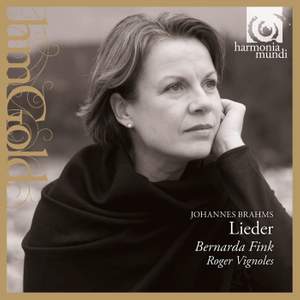
Brahms: Lieder

Brahms: Lieder


Brahms:

Bei dir sind meine Gedanken (No. 2 from Sieben Lieder, Op. 95)

Wie Melodien zieht es mir, Op. 105 No. 1

Sapphische Ode, Op. 94 No. 4

Feldeinsamkeit, Op. 86 No. 2

Nachtigall, Op. 97 No. 1

Verzagen, Op. 72 No. 4

Alte Liebe, Op. 72 No. 1

An die Nachtigall, Op. 46 No. 4 (Text: L.C.H. Hölty)

Das Mädchen spricht, Op. 107 No. 3

Dein blaues Auge, (No. 8 from Acht Lieder und Gesänge, Op. 59)

Geheimnis, Op. 71 No. 3

Ständchen, Op. 106 No. 1

Von ewiger Liebe, Op. 43 No. 1

Der Tod, das ist die kühle Nacht, Op. 96 No. 1

Auf dem Kirchhofe, Op. 105 No. 4

Die Mainacht, Op. 43 No. 2

Anklänge, Op. 7 No. 3

Spanisches Lied, Op. 6 No. 1

Mädchenlied (No. 6 from Sieben Lieder, Op. 95)

Am Sonntag Morgen Op. 49 No. 1

Liebestreu, Op. 3 No. 1

Vergebliches Ständchen, Op. 84 No. 4

Das Mädchen (No. 1 from Sieben Lieder, Op. 95)

Therese, Op. 86 No. 1

Mädchenlied, Op. 107 No. 5

Der Jäger (No. 4 from Sieben Lieder, Op. 95)

Der Schmied Op. 19/4

Der Gang Zum Liebchen, Op. 31 No. 3

Sonntag, Op. 47 No. 3

Mädchenlied, Op. 85 No. 3

Wiegenlied, Op. 49 No. 4 (Lullaby)


Bernarda Fink (mezzo-soprano) & Roger Vignoles (piano)

Released or re-released in last 6 months

Harmonia Mundi - HMGold - HMG501926

(CD)

$11.75

Scheduled for release on 3 June 2013. Order it now and we will deliver it as soon as it is available.

Brahms - Cello Sonatas Nos. 1 & 2

Brahms - Cello Sonatas Nos. 1 & 2


Brahms:

Cello Sonata No. 1 in E Minor, Op. 38

Cello Sonata No. 2 in F major, Op. 99

Anklänge, Op. 7 No. 3

Die Mainacht, Op. 43 No. 2


Anthony Leroy (cello) & Sandra Moubarak (piano)

“The performances are exceptional. Anthony Leroy and Sandra Moubarak have a real understanding of Brahm's unusually long phrases. In the great sweeping melody of the opening of the E minor Sonata they begin pensively and are not afraid to use considerable freedom of tempo change at the peak of the exposition before returning to this inwardness. The Adagio, another very long and varied melody, is beautifully phrased...” Gramophone Magazine, August 2007

“Brahms's cello sonatas tackle head on the real problem of balancing the cello's potentially gruff lowest register and singing high tones with the orchestra, but he does not make matters easy for himself. Some of the piano textures are very thick and there are places in this recording where the problems are barely solved: the start of the F major Second Sonata and the finale of the E minor No 1 are cases in point. He is at least considerate enough to refine the piano textures when he risks asking the cello to play the flowing theme of this finale with the tricky slurred pizzicato, and this comes off excellently here.
The performances are exceptional. Anthony Leroy and Sandra Moubarak have a real understanding of Brahms's unusually long phrases. In the great sweeping melody of the opening of the E minor Sonata they begin pensively and are not afraid to use considerable freedom of tempo change at the peak of the exposition before returning to this inwardness.
The Adagio, another very long and varied melody, is beautifully phrased, as is the middle section of the third movement, its marking dolce espressivo constrasting with the general Allegro passionato. The E minor Sonata's Minuet has a delightful lilt, and they go with a will at the difficult final fugue. There are also charming performances of the two songs included as fill-ups.”
Gramophone Classical Music Guide, 2010

Zigzag - ZZT070202

(CD)

$17.00

Usually despatched in 4 - 5 working days.

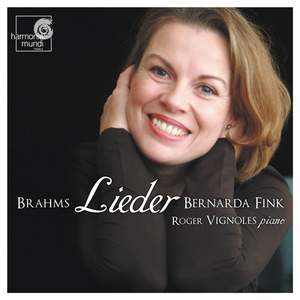
Brahms - Lieder

Brahms - Lieder


Brahms:

Bei dir sind meine Gedanken (No. 2 from Sieben Lieder, Op. 95)

Wie Melodien zieht es mir, Op. 105 No. 1

Sapphische Ode, Op. 94 No. 4

Feldeinsamkeit, Op. 86 No. 2

Nachtigall, Op. 97 No. 1

Verzagen, Op. 72 No. 4

Alte Liebe, Op. 72 No. 1

An die Nachtigall, Op. 46 No. 4 (Text: L.C.H. Hölty)

Das Mädchen spricht, Op. 107 No. 3

Dein blaues Auge, (No. 8 from Acht Lieder und Gesänge, Op. 59)

Geheimnis, Op. 71 No. 3

Ständchen, Op. 106 No. 1

Von ewiger Liebe, Op. 43 No. 1

Der Tod, das ist die kühle Nacht, Op. 96 No. 1

Auf dem Kirchhofe, Op. 105 No. 4

Die Mainacht, Op. 43 No. 2

Anklänge, Op. 7 No. 3

Spanisches Lied, Op. 6 No. 1

Mädchenlied (No. 6 from Sieben Lieder, Op. 95)

Am Sonntag Morgen Op. 49 No. 1

Liebestreu, Op. 3 No. 1

Vergebliches Ständchen, Op. 84 No. 4

Das Mädchen (No. 1 from Sieben Lieder, Op. 95)

Therese, Op. 86 No. 1

Mädchenlied, Op. 107 No. 5

Der Jäger (No. 4 from Sieben Lieder, Op. 95)

Der Schmied Op. 19/4

Der Gang Zum Liebchen, Op. 31 No. 3

Sonntag, Op. 47 No. 3

Mädchenlied, Op. 85 No. 3

Wiegenlied, Op. 49 No. 4 (Lullaby)


Bernarda Fink (mezzo) & Roger Vignoles (piano)

"Brahms was capable - as were all his great predecessors - of writing a melody that was his own property, right down to the smallest inflection, and yet sounded like a folksong. Or, to put it another way, a melody that was a real, genuine folksong - and yet was by Brahms." Wilhelm Furtwängler, 1931

“From Roger Vignoles's first light-filled notes in 'Bei mir sind meine Gedanken', with Bernada Fink's smiling, wide-eyed voice, these performers make it sound as though the ink is still wet on Brahms's manuscripts. The real skill of Fink and Vignoles is to capture that fusion of physical and emotional movement within a song - and to recreate it with real spontaneity.” BBC Music Magazine, March 2007 ****

“'Bei dir sind meine Gedanken', one of Brahms's happiest songs, makes an inviting aperitif. Buoyed by the evanescent shimmer of Roger Vignoles's accompaniment, Bernarda Fink is all confiding eagerness, phrasing deftly and gracefully and showing a natural feeling for Brahmsian rubato. One would expect Fink's warm, luminous mezzo, flecked by darker, deeper tints, to be near ideal for, say, the nostalgia of 'Alte Liebe' or the many songs of elegiac loss and heartbreak, all touchingly done here. But having thought of her as an essentially 'serious' singer, dignified, eloquent, the vivacity and 'face' she brings to 'Bei dir sind meine Gedanken' and other lighter songs is sheer delight. 'Ständchen', here more sunlit than moonlit, is charmingly characterised, with an affectionate caress on the dreaming girl's 'Vergiss nicht mein'. Fink is playfully coquettish without archness in the delicious 'Spanisches Lied', and sings 'Vergebliches Ständchen' with an outgoing boldness and witty touches of timing – and the tender lingering on the penultimate 'Mein Knab' suggests that the boy's luck may soon be about to change.
Other singers have brought a more intense yearning to 'Die Mainacht' and found greater mystery amid the slumberous balm of 'Feldeinsamkeit'.
But Fink's flowing performances, sensitively shaped and inflected, are never less than satisfying. It is good to be reminded, too, that, for all its melancholy, 'Die Mainacht' is also a song of spring, suffused by warm major-key harmonies, with a hint of excited anticipation at the line 'Wann, o lächelndes Bild'. On the face of it, Fink's lyric mezzo would seem to be on the light side for 'Von ewiger Liebe'. But with Vignoles imaginatively 'orchestrating' the keyboard part, she gives a finely graded, deeply moving performance, vividly contrasting the contained passion of the boy's words with the girl's gentle candour. The glowing climactic avowal of eternal love is truly overwhelming, setting the seal on a Brahms recital of rare distinction.”
Gramophone Classical Music Guide, 2010

“For all the tragic, premature loss last year of Lorraine Hunt Lieberson, Argentinian Bernarda Fink is just one of a golden generation of mezzos vying for the mantle of Janet Baker. One of the most versatile, as at ease in Baroque repertoire as in music from Handel and Mozart to Schumann, Fink's rich, warm voice boasts the perfect blend of colour and clarity for this selection of 31 songs from the almost 200 Brahms wrote. Her musical intelligence combines with the sensitivity of Roger Vignoles to capture the folk-song spirit behind their urbane polish.” The Observer

GGramophone Awards 2007

Finalist - Solo

GGramophone Magazine

Editor's Choice - May 2007

Harmonia Mundi - HMC901926

(CD)

$17.25

Usually despatched in 3 - 4 working days.

Copyright © 2002-13 Presto Classical Limited, all rights reserved.