Bax: Symphony No. 5 in C sharp minor

This page lists all recordings of Symphony No. 5 in C sharp minor, by Arnold Edward Trevor Bax (1883-1953) on CD & download (MP3 & FLAC).

Recommendations

100 Greatest RecordingsEditor's Choice
December 2003
Re-issue of the Month
June 2008
Rosette

All recordings

Prices shown exclude VAT. (UK tax is not payable for deliveries to United States.)
See Terms & Conditions for p&p rates.

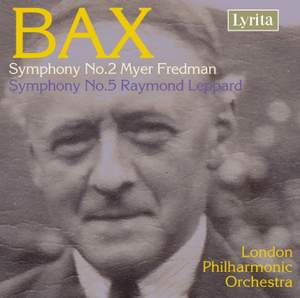
Bax - Symphonies Nos. 2 & 5

Bax - Symphonies Nos. 2 & 5


Bax:

Symphony No. 2 in E minor and C major

Symphony No. 5 in C sharp minor

Raymond Leppard


“A majestic (and long overdue) return to currency for two cornerstones of the Lyrita catalogue. The LPO respond with all the edge-of-seat excitement of new discovery, particularly so in the turbulent Second Symphony, where an impassioned and inspired Myer Fredman secures playing of terrific fire, dedication and spontaneity.” Gramophone Magazine, June 2008

“If Raymond Leppard's account of the Fifth operates at a slightly lower voltage, his cannily paced, sensitive and meticulously prepared reading none the less remains a most distinguished contribution to the Bax discography.
Both these vintage displays were marvellously engineered by Decca personnel working within the benign acoustic of Walthamstow Town Hall. The eloquent original sleeve-notes by Lewis Foreman and Robert Layton have sensibly been retained, and Simon Gibson's remasterings are first class (No 2 sounding a tad more clinical than it did on LP). A hugely rewarding reissue.”
Gramophone Classical Music Guide, 2010

GGramophone Magazine

Re-issue of the Month - June 2008

Lyrita - SRCD233

(CD)

$17.25

Usually despatched in 4 - 5 working days.

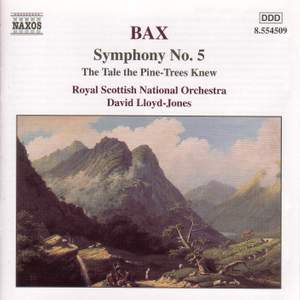
Bax: Symphony No. 5

Bax: Symphony No. 5


Bax:

Symphony No. 5 in C sharp minor

The Tale the Pine Trees Knew


“The Fifth is perhaps the most characteristic of Bax's symphonies. For all the music's powerful range of emotion and its seemingly bewildering profusion of material and countless moments of bewitching beauty, its resourceful symphonic processes aren't easy to assimilate on first hearing. Lloyd-Jones's intelligent and purposeful direction pays handsome dividends, and a well-drilled RSNO responds with sensitivity and enthusiasm. Lloyd-Jones excels in the opening movement's tightly knit canvas, its epic ambition matched by a compelling sense of momentum, architectural grandeur and organic 'wholeness'. In the slow movement Lloyd-Jones paints a chillier, more troubled landscape than does Bryden Thomson (Chandos).
The finale's main Allegro sets out with gleeful dash and a fine rhythmic snap to its heels. Lloyd-Jones judges that tricky, crisisridden transition into the epilogue well, and the apotheosis is a hard-won, grudging victory.
The 1931 tone-poem The Tale the Pine TreesKnew makes an ideal bedfellow, foreshadowing as it does the bracingly 'northern' (to quote the composer) demeanour of the Fifth. Lloyd- Jones's comparatively extrovert treatment of the work's exultant final climax works perfectly convincingly within the context of his overall conception. Another eminently truthful, judiciously balanced sound picture from producer/ engineer Tim Handley.”
Gramophone Classical Music Guide, 2010

“Part of an excellent cycle of Bax symphonies. Start with this disc and I'll bet you'll want the rest.” Stereophile (USA), June 2001

20% off Naxos

Naxos - 8554509

(CD)

Normally: $8.25

Special: $6.60

(also available to download from $6.00)

Usually despatched in 2 - 3 working days. (Available now to download.)

Bax - The Symphonies

Bax - The Symphonies


Bax:

Symphonies Nos. 1-7

Tintagel

Rogue's Comedy Overture


A set that exudes love for the often great music on every page - a modern classic - James Jolly, Gramophone 1000th issue

“This Bax symphony cycle comes under the baton of the composer's doughtiest champion, and superlatives are in order. Even seasoned Baxians will be startled by the propulsive vigour and sinewy strength of these performances.
In its uncompromising thrust and snarling tragedy, Handley's account of the First Symphony packs an almighty punch, but also quarries great detail from Bax's darkly opulent orchestration. In the closing pages the motto theme's sanguine tread is soon snuffed out, as the shredded nerve-ends of this music are exposed as never before.
The wild and brooding Second generates less heady sensuality than either the Thomson or Myer Fredman's pioneering Lyrita version, but there's ample compensation in the chaste beauty and enviable authority of Handley's conception.
Scrupulous attention is paid to thematic unity and the many contrapuntal and harmonic felicities that bind together the progress of this extraordinary canvas. The BBC Philharmonic respond with such eager application that it's easy to forgive some slight loss of composure in the build-up to the cataclysmic pinnacle.
There can be no reservations about the Third, an interpretation that's by far the finest since Barbirolli's 1943-4 world première recording with the Hallé. Bax's iridescent textures shimmer and glow, bass lines stalk with reassuring logic and solidity, and these exemplary artists distil all the poetry and mystery in the ravishing slow movement and epilogue. Deeply moving is Handley's tender, unforced handling of the first movement's Lento moderato secondary material.
Handley's previous recording of the Fourth is comprehensively outflanked by this bracing remake. If you've ever regarded the Fourth as something of a loose-limbed interloper in the Bax canon, this will make you think again, such is the muscular rigour Handley locates in this lovable creation. At the same time, there's playful affection, rhythmic bite and pagan splendour of both outer movements.
Revelations abound, too, in the Fifth. Handley plots a superbly inevitable course through the first movement. At the start of the slow movement the glinting brilliance and sheen of the orchestral playing take the breath away, as does the richness of the lower strings in the first subject.
The finale is stunning, its whirlwind Allegro a veritable bevy of cackling demons.
The bass ostinato that launches the Sixth picks up where the epilogue of the Fifth left off. A taut course is steered through this stormy first movement, though in some ways Norman Del Mar's recording got closer still to the essence of Bax's driven inspiration. The succeeding Lento has a gentle radiance that's very affecting. However, it's in the innovatory finale where Handley pulls ahead of the competition, cannily keeping some power in reserve, and locating a transcendental wonder in the epilogue.
Handley's Seventh is wonderfully wise and characterful music-making, the first movement in particular sounding for all the world as if it was set down in a single take. There's bags of temperament about the performance, as well as an entrancing freedom, flexibility and purposefulness that proclaim an intimate knowledge of and total trust in the composer's intentions. The BBC Philharmonic respond with unflagging spirit and tremendous body of tone.
A majestic Tintagel and rollicking account of the 1936 Rogue's Comedy Overture complete the feast. Disc 5 houses an hour-long conversation about Bax the symphonist between the conductor and Andrew McGregor. Stephen Rinker's engineering does fabulous justice to Bax's imaginative and individual orchestration, particularly towards the lower end of the spectrum.
The set is magnificent; its insights copious.”
Gramophone Classical Music Guide, 2010

“Handley is in total sympathy with Bax's music and his direction is authoritative as well as idiomatic. Superb sound from the Chandos and BBC engineers. We would not be without this set.” Penguin Guide, 2011 edition

GGramophone Awards 2004

Record of the Year Finalist

GGramophone Magazine

100 Greatest Recordings

GGramophone Magazine

Editor's Choice - December 2003

Penguin Guide

Rosette Winner

Chandos - CHAN10122

(CD - 5 discs)

$45.00

(also available to download from $32.75)

In stock - usually despatched within 1 working day.

Copyright © 2002-13 Presto Classical Limited, all rights reserved.