This page lists all recordings of Keyboard Sonata No. 19 in C minor, by Antonio Soler (1729-83) on CD, SACD & download (MP3 & FLAC). Generally, more recent releases are listed first, but with priority given to those that are in stock. |
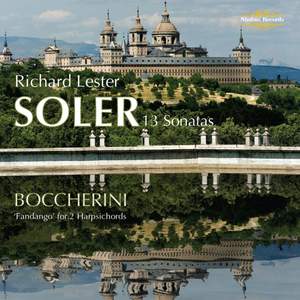
All recordingsPrices shown exclude VAT. (UK tax is not payable for deliveries to United States.) See Terms & Conditions for p&p rates. | |  | Soler: 13 Sonatas
The harpsichord music of Antonio Soler is to a great extent overshadowed by the keyboard works of his near contemporary Domenico Scarlatti, music master to Queen Maria Barbara of Spain. Soler though, rightly claims a prominent position amongst those few select composers who became beacons of the Classical Enlightenment and whose music possessed elements of genius. At the age of twenty-three Soler took Holy Orders, entering the Escorial as a Hieronymite monk in the Order of Saint Jerome where he remained in relative confinement for the rest of his life. His existence at the Escorial is well documented by a colleague who wrote an extremely detailed obituary notice, describing a man who loved his cell and was always there except for duty. Whilst at the Escorial, Soler studied with José de Nebra and Scarlatti. Soler’s output of around 200 harpsichord sonatas were written for the Infante don Gabriel, whom Soler taught from around 1765. The sonatas on this CD can be pigeonholed into three categories: the dance (sonatas R21, R118, R43 & R92d). Those which are slower and more vocal in nature (R4 & R110) with a hint of the melismatic expression found in cante hondo: a pure form of Andalucian folk music. And those which lean towards the new ‘galant’ style (R56 & M27). There are also frequent echoes of the guitar punteado and rasgueado styles, R86 & R43 which are also related to the dance. Luigi Boccherini was born in Lucca, Italy in 1743 and was renowned as a composer and ‘cellist. In 1761, Boccherini went to live in Madrid where he was appointed music master to the Infante Luis Antonio, and he would certainly have met Soler. This version of Boccherini’s fandango, from the last movement of Quintet No 4 in D major, is Richard Lester’s own arrangement for two harpsichords. | 
| | | Usually despatched in 4 - 5 working days. |
|
|
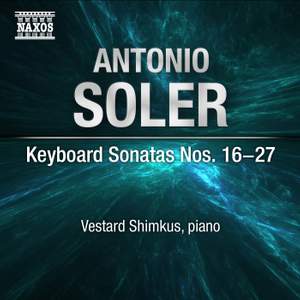
| |  | Antonio Soler: Keyboard Sonatas Nos. 16-27
This collection completes the 27 sonatas by Padre Antonio Soler which make up his contribution to the Fitzwilliam manuscript. Nos. 1–15 are available on Naxos 8572515. These bipartite sonatas contain prime examples of Soler’s theories of modulation, from elegant “slow” passing between notes to “agitated” extremes of contrast. The result is constant surprise, both in spectacular technique and expressive depth. Award-winning pianist Vestard Shimkus has been described as “a phenomenon” (conductor Paavo Järvi), “superb” (American Record Guide) and “inspired” (BBC.co.uk website). | | | (also available to download from $6.00) | Usually despatched in 2 - 3 working days. (Available now to download.) |
|
|
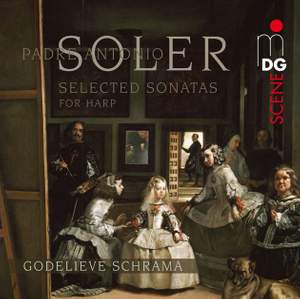
| |  | Padre Antonio Soler: Selected Sonatas for Harp
Soler composed day and night in his monastic cell near Madrid and produced nearly 500 works in three decades and they demonstrate the Spanish rococo’s radiant and vibrant zest for life. Godelieve Schrama has examined Soler’s famous harpsichord sonatas with an eye to her instrument, the harp, and recorded them for the first time on SACD. | | | Usually despatched in 2 - 3 working days. |
|
|
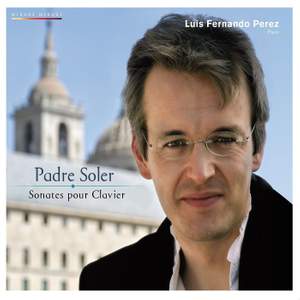
| |  | Soler - Piano Sonatas
Luis Fernando Pérez (piano) Born in Madrid in 1977, Luis Fernando Pérez studied with Dimitri Bashkirov, Pierre-Laurent Aimard, Alicia de Larrocha, and has received masterclasses from such maestri as Leon Fleisher,Andras Schiff and Menahem Pressler. His latest record [after three on the Verso label] is dedicated to the sonatas of the baroque Spanish composer Antonio Soler, all of which have been revised from original manuscripts and which contains a never before recorded nor published sonata. "Never would I have imagined that those constant week-end flying visits my parents and I used to make to San Lorenzo de El Escorial, a delightful village in the mountains above Madrid where Philip II built the imposing Monastery of San Lorenzo (something of a fetish for me), were going to unleash my love for the music of Soler, now reflected in this CD dedicated to his magnificent sonatas. San Lorenzo was the symbol of a great, powerful, rich and mystic Spain.This genial friar lived within the walls of its monastery for many years under the protection of Carlos III, the "Enlightened King" where he was tutor to the King's son, the Infante Don Gabriel. And it is at San Lorenzo where Soler lies buried in his modest tomb. Deeply religious, humane, full of life, Soler blended tradition with innovation, the past with the future, Spanish folklore guised in an altogether more international language. There have been almost two years' worth of research, microfilms, manuscripts and the rest. A thousand thanks to my teacher, Alicia de Larrocha, herself a great exponent of Soler's work, to Enrique Igoa for his kindness and wisdom, for the breakfasts at his house during which we would exchange information, to José Carlos Tata, Director of the Royal Library of the Madrid Conservatory, for so generously opening up the library's archives to me, and to N. R. Robinson and Diane Hudson of the Fitzwilliam Museum and the Cambridge University Library for their impeccable care and attention." Luis Fernando Pérez "It is perhaps early in the 21st Century for predictions, but it is already clear to me that Luis Fernando Perez will take his place as one of the leading pianists of his generation. While technically brilliant, musically sophisticated, and intellectually curious, Luis Fernando has much more to offer us. Like the greats of the past, he possesses that rare ability to direct his musical message straight to the hearts and minds of his listeners. This gift, above all, sets him apart from his fellow musicians; it commands us to listen." Tom Deacon Exec. Prod., "Great pianists of the 20th Century" | | | Usually despatched in 3 - 4 working days. |
|
|
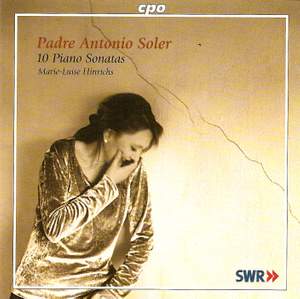
| |  | Padre Antonio Soler: 10 Piano Sonatas
Marie-Luise Hinrichs (piano) Spanish composer Padre Antonio Soler is most celebrated for his keyboard sonatas, writing over 120. They have been compared to those of Domenico Scarlatti, who it is assumed he probably studied with. Some of his sonatas are reminiscent of the dance music of Spain, shown not only in their abrupt, immediate juxtaposition of keys and typical Spanish rhythms but also in the many ornaments in the tradition of Castilian and Catalonian folk music. Marie-Louise Hinrichs has long been fascinated by these works and for the first time on CPO presents a sensational interpretation of Soler’s sonatas. | | | (also available to download from $10.50) | Usually despatched in 2 - 3 working days. (Available now to download.) |
|
|
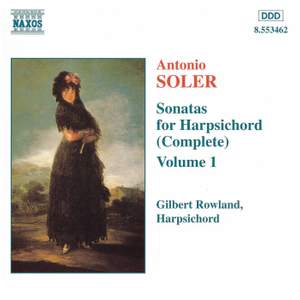
| |  | Soler - Sonatas For Harpsichord Volume 1
“Gilbert Rowland's playing...can be both brilliant and expressive, with nicely formed trills which end firmly and under rhythmic control.” Early Music Review | | | (also available to download from $6.00) | Usually despatched in 2 - 3 working days. (Available now to download.) |
|
|
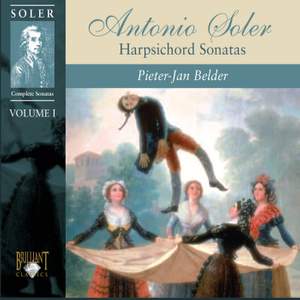
| |  | Antonio Soler: Harpsichord Sonatas Volume 1
Having scaled (for Brilliant Classics) the musical Everest that is Domenico Scarlatti's 555 keyboard sonatas, Pieter-Jan Belder now turns his attention to his Spanish contemporary, Antonio Soler. Solers productivity was hardly less astonishing, especially as a monk at the abbey of El Escorial required to spend much of his time either in contemplation or directing the abbeyÂ’s music. In this capacity he would most likely have met Scarlatti, as the latter accompanied his royal patrons to their summer retreat at El Escorial. SolerÂ’s keyboard sonatas are also bipartite constructions, with new twists of harmony and invention around each unexpected corner. This first volume is completed by one of the most curious of all harpsichord works, a Fandango with a slowly evolving, hypnotic effect that has more than once been compared to Ravel's Boléro. “If these performances are less thoughtful in approach than Bob van Asperen's in the early '90s… they benefit from a greater sense of spontaneity and more characterful instrumental sound. At super-budget price, it hardly needs adding that they are superb value.” Gramophone Magazine, May 2009 | | | Usually despatched in 4 - 5 working days. |
|
|
| |
|