Browse: Schnittke - Sonata for Violin and Chamber Orchestra
Composer: Alfred Schnittke (1934–98)
-
Downloads
What are FLAC and MP3? -
Bergs Sommarensemble
Bengt Forsberg (piano), Moshe Ben-Dor (viola)
Berg Summer Ensemble, Karl-Ove Mannberg
Downloads
What are FLAC and MP3? -
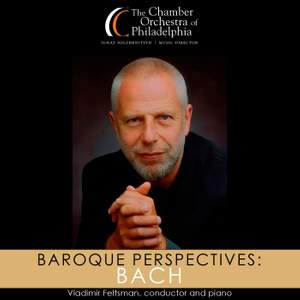
Baroque Perspectives: Bach
Vladimir Feltsman (piano), Vladimir Feltsman (harpsichord)
Chamber Orchestra of Philadelphia
Downloads
What are FLAC and MP3? -
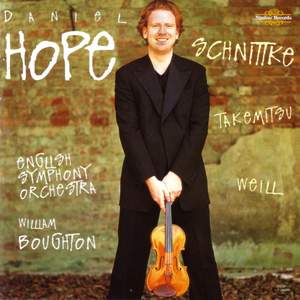
Schnittke, Weill & Takemitsu: Works for Violin & Ensemble
Daniel Hope (violin), Simon Mulligan (piano)
English Symphony Orchestra, William Boughton
Full marks to Nimbus for variety. The danger is that three such different composers, combined in a way you'd never expect in a concert, will cancel each other out. Fortunately, the performances... — More…
CD
$14.75Downloads
What are FLAC and MP3? -
Downloads
What are FLAC and MP3? -
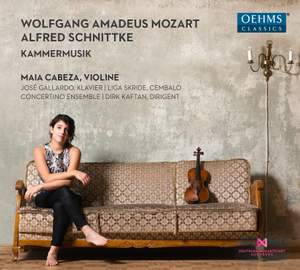
Mozart & Schnittke: Kammermusik
Maia Cabeza (violin), José Gallardo (piano) & Liga Skride (harpsichord)
Concertino Ensemble of the Leopold Mozart Centre of Augsburg University, Dirk Kaftan
CD
$14.00Downloads
What are FLAC and MP3? -
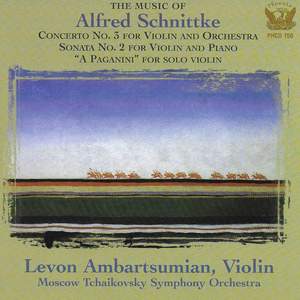
Schnittke: Violin Concerto
Levon Ambartsumian (violin) & Anatoly Sheludyakov (piano)
Moscow Tchaikovsky Symphony Orchestra, Mikhail Kukushkin
Downloads
What are FLAC and MP3? -
Offer,
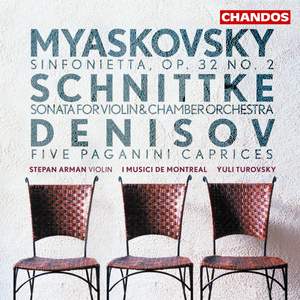
Miaskovsky: Sinfonietta No. 2 in B minor, Op. 32 No. 2, etc. Stepan Arman (violin)
I Musici de Montréal, Yuli Turovsky
Downloads
What are FLAC and MP3? -
CD
$14.75Downloads
What are FLAC and MP3? -
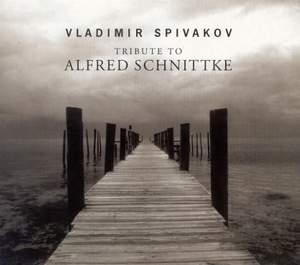
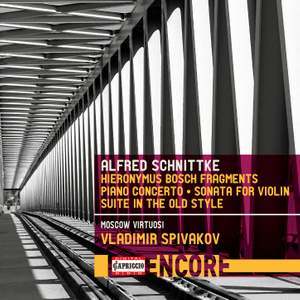
Schnittke: Hieronymus Bosch Fragments, Piano Concerto, Sonata for Violin & Suite in the Old Style
Vladimir Spivakov (violin), Alexander Ghindin (piano), Dmitri Kortchak (tenor)
Moscow Virtuosi
CD
$14.00Downloads
What are FLAC and MP3?