Marchand, L: Fond d’orgue

This page lists all recordings of Fond d’orgue, by Louis Marchand (1669-1732) on CD & download (MP3 & FLAC).

Prices shown exclude VAT. (UK tax is not payable for deliveries to United States.)
See Terms & Conditions for p&p rates.

Organ Works

Organ Works


Charpentier, J:

Mass in E minor (Gloria)

Mass in E minor (Agnus Dei)

Fugue

Corrette, M:

Magnificat in the 1st tone (1737)

Magnificat in the 3rd tone (1737)

Magnificat in the tone 5th tone (1750)

Pieces for organ in a new genre

La Prise de Jericho

Les Etolies

Les Giboulees de mars

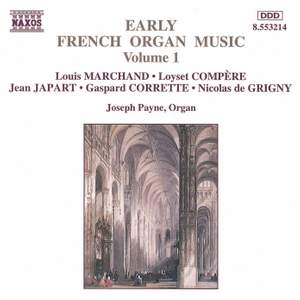
Marchand, L:

Fond d’orgue

Raison:

La Paix tant desiree


Helga Schauerte (church organ of St Louis, The National Military Academy of la Flèche)

The programme chosen for this CD follows the evolution of organ music from Louis XIV to Louis XVI.

Syrius - SYR141408

(CD - 2 discs)

$17.00

In stock - usually despatched within 1 working day.

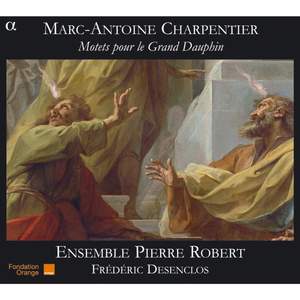
Marc-Antoine Charpentier: Motets pour le Grand Dauphin

Marc-Antoine Charpentier: Motets pour le Grand Dauphin


Charpentier, M-A:

Precatio pro filio Regis, H. 166

Sola vivebat in antris Magdalena lugens, H. 373

Supplicatio pro defunctis, H. 328

Quemadmodum desiderat cervus, H. 174

O Salutaris hostia, H. 248

Gratiarum actiones pro restitua delphini salute, H. 328

Marchand, L:

Fugue sur les anches

Fond d’orgue

Tierce en taille

Fugue


As eldest son of Louis XIV, Louis of France, nicknamed le Grand Dauphin, was marked out to become king of France at his father's death. He was therefore given the education of a monarch, as this would have been conceived in the 17th century: running the affairs of the kingdom required knowledge of diplomatic and commercial relations, but also the acquisition of the external manifestations the Sun King had resorted to so skilfully, subjecting architecture, drama, painting and music to the requirements of his government. Just like his father, the Dauphin surrounded himself with chosen personalities, amongst whom the composer Marc-Antoine Charpentier. Removed from an official position at court by the talent and the intrigues of Lully, he was not allowed to write for the opera, for which the "Surintendant de la musique" had obtained a royal privilege. He therefore concentrated his creative activity primarily on sacred music, giving it the "Italian style" expressivity he had learned in Rome, where he had studied with Carrissimi.This religious lyricism deploys itself in the motets composed for Monseigneur's religious services.The latter would remain Dauphin for eternity since he died in 1711, four years before his father.

Alpha - ALPHA138

(CD)

$17.00

(also available to download from $10.50)

Usually despatched in 4 - 5 working days. (Available now to download.)

Copyright © 2002-13 Presto Classical Limited, all rights reserved.